We would love to hear about your Project
Get In Touch
Follow Us


Place & Property
|
Published on
September 23, 2026
|
updated last
November 10, 2026
|
5 MIN READ
The Complete Guide to B2B Website Strategy: Aligning Brand, Business and Digital for Growth

A great B2B website doesn't start with design. It starts with understanding the business.
For complex B2B organisations, a website is often the most important expression of the brand. It's where prospective customers form their first impressions, explore capabilities, evaluate credibility and decide whether a business is worth engaging.
Yet many B2B websites fail to reflect the true value of the organisations behind them.
They might look impressive, but their structure mirrors internal departments rather than customer needs. Their messaging focuses on services instead of outcomes. Their content explains what the business does without clearly communicating why it matters.
The result is a disconnected digital experience that creates confusion rather than confidence.
At TOAST, we believe a website should do more than communicate information. It should bring business strategy, brand positioning and digital experience together to create meaningful commercial value.
The most effective B2B websites don't simply represent a business. They help move it forward.

What is B2B website strategy alignment?
B2B website strategy alignment is the process of connecting an organisation's business objectives, brand positioning, customer needs and digital experience into one cohesive website strategy.
It ensures every major website decision, from information architecture and messaging to user experience, technology and conversion pathways, supports a defined business purpose.
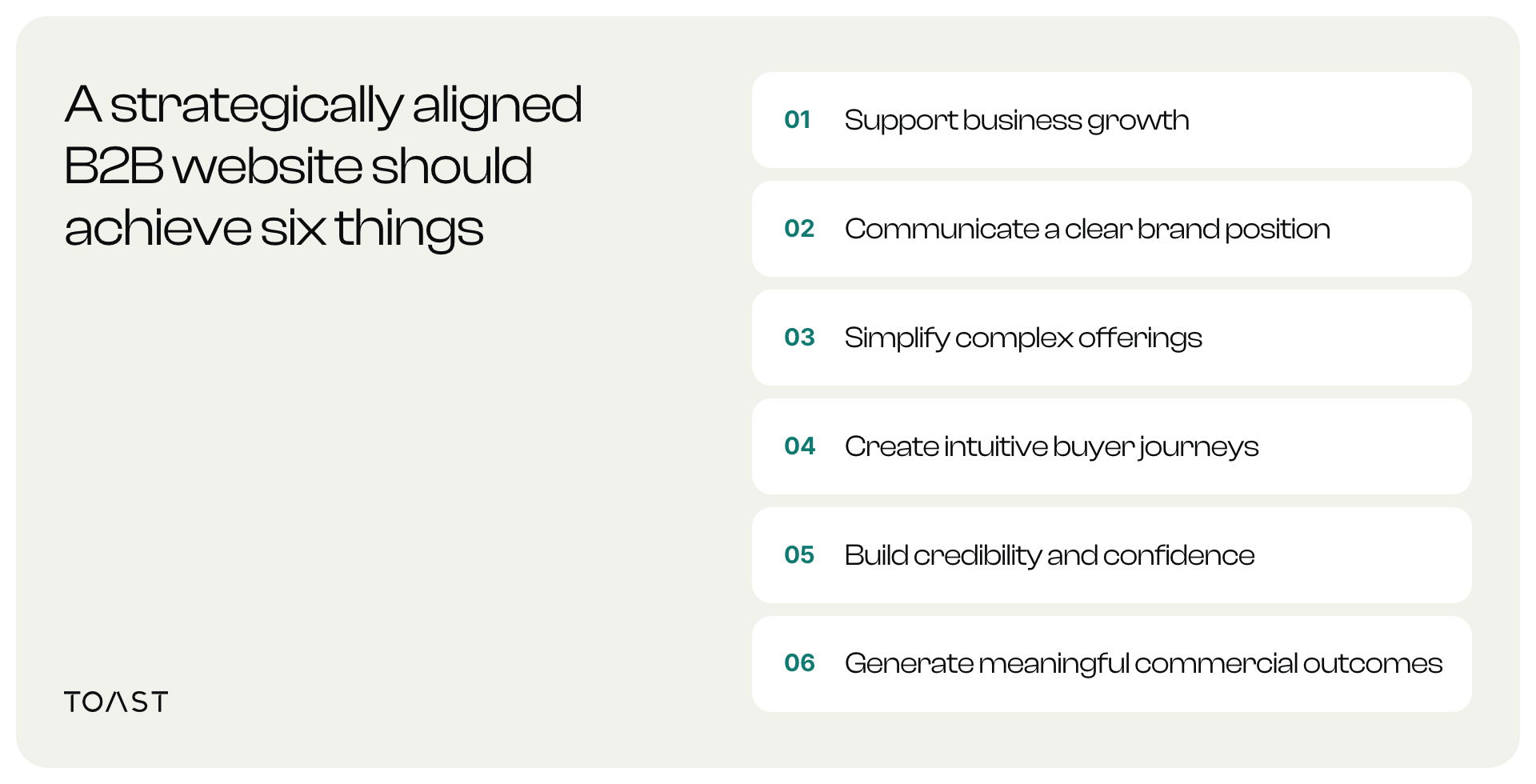
A strategically aligned B2B website should achieve six things:
- Support business growth: Prioritise the markets, services and commercial opportunities that matter most.
- Communicate a clear brand position: Explain what makes the organisation relevant, valuable and different.
- Simplify complex offerings: Help customers understand services, solutions and capabilities without unnecessary complexity.
- Create intuitive buyer journeys: Guide different audiences towards the information and actions relevant to their needs.
- Build credibility and confidence: Use expertise, evidence and project experience to support purchasing decisions.
- Generate meaningful commercial outcomes: Turn digital engagement into qualified opportunities, stronger relationships and measurable business value.
The goal isn't simply to create a better-looking website.
It's to create a digital platform that connects what the business wants to achieve with what its customers need to understand.
Why do complex B2B businesses need a website strategy?
Complex B2B organisations face challenges that are fundamentally different from those of consumer-facing businesses.
They often operate across multiple industries, provide specialist or interconnected services and sell to buying groups involving several stakeholders.
Their purchasing cycles can be long, their offerings difficult to compare and their value challenging to communicate in a few sentences.
Without a clear digital strategy, websites frequently become collections of information rather than connected customer experiences.
Common problems include:
- Navigation built around internal departments rather than customer needs.
- Complex service structures that are difficult to understand.
- Generic messaging that fails to establish meaningful differentiation.
- Disconnected content, case studies and service information.
- Inconsistent experiences across business units, markets or locations.
- Limited integration between marketing, digital and business development.
- Website performance measured through traffic rather than commercial value.
These problems are often treated as design or usability issues.
But in many cases, the underlying challenge is strategic.
If the business hasn't clearly defined its position, priorities and audiences, the website will struggle to communicate them.
That's why an effective website strategy needs to begin well before wireframes, visual concepts or technology decisions.
1. Start with business strategy, not website design
One of the most common mistakes in B2B website projects is moving into design before establishing what the website needs to achieve.
A business might request a more contemporary look, improved navigation or better lead generation. These may be legitimate needs, but they don't explain the commercial purpose behind the investment.
The more important questions are:
- Where is the business heading over the next three to five years?
- Which markets, sectors and customer groups represent the greatest growth opportunities?
- Which services or solutions should be prioritised?
- What does the organisation need to be known for?
- What role should the website play in marketing, sales and customer relationships?
- How will the business define success?
The answers influence every decision that follows.
For example, a professional services firm expanding into new international markets may need a website that demonstrates global capability while maintaining local relevance.
A technology company moving from individual products towards integrated solutions may need to completely rethink how it communicates its offering.
A multidisciplinary engineering consultancy may need to shift from a service-led structure to one organised around industries, customer challenges and business outcomes.
Each requires a different strategic response.
The TOAST approach: Discovery before design
At TOAST, our digital projects begin by understanding the business, its brand and the opportunities ahead.
Through stakeholder interviews, collaborative workshops, market research and a review of the existing digital experience, we identify the commercial and customer challenges the website needs to address.
This establishes a strategic foundation before moving into website architecture, content, UX and design.
The objective is simple: every digital decision should have a clear business reason behind it.

2. Align the website with your brand positioning
A website is one of the most visible and influential expressions of a brand.
Yet brand strategy and website development are often treated as separate exercises.
The brand team defines positioning and messaging. The digital team designs the interface. The content team populates the pages.
Without a connected approach, the result can be a visually consistent website that fails to communicate a compelling point of difference.
Brand positioning should inform the entire digital experience.
It establishes:
- Who the organisation is and what it stands for.
- Which audiences it needs to influence.
- What makes its offering relevant and valuable.
- How it differs from competitors.
- The messages and evidence needed to build confidence.
- The personality, tone and experience customers should associate with the business.
This becomes the foundation for the website's messaging hierarchy, content strategy, visual language and customer journeys.
For example, if a company's positioning is built around simplifying complexity, its website should demonstrate that promise through intuitive navigation, clear explanations and an effortless user experience.
If its competitive advantage is deep technical expertise, the website needs to make that expertise accessible without diluting its substance.
A strong B2B website doesn't just communicate the brand. It brings the brand promise to life through the experience itself.

3. Simplify complex offerings through strategic information architecture
Many B2B businesses organise their websites around how the company operates internally.
Business divisions become navigation categories. Services are grouped by departments. Every capability receives similar prominence regardless of its commercial importance.
While this structure may make sense to employees, it doesn't necessarily reflect how customers think.
Prospective buyers often arrive with a challenge, not a service category.
They may know the outcome they want to achieve without knowing which solution or specialist capability will deliver it.
Effective information architecture bridges that gap.
What is information architecture in B2B website design?
Information architecture is the strategic organisation and structuring of website content, navigation and pathways so users can find, understand and act on relevant information.
For complex B2B websites, this may involve organising content around:
- Industries or market sectors.
- Customer challenges and business needs.
- Solutions and outcomes.
- Products and specialist services.
- Project types or stages.
- Different customer or stakeholder groups.
The right structure depends on the business strategy, customer research and the relationship between its offerings.
Some organisations require multiple pathways to the same information, allowing different audiences to navigate in ways that make sense to them.
The goal is not to remove complexity from the business.
It's to make complexity easier for customers to navigate and understand.
At TOAST, we use research, content planning, information architecture and UX strategy to create digital experiences that balance commercial priorities with customer needs.
4. Translate technical capabilities into clear customer value
Complex B2B organisations often have an abundance of technical information but struggle to communicate its commercial relevance.
Websites become filled with service descriptions, industry terminology and lists of capabilities.
While this information is important, it doesn't always answer the question buyers care about most:
Why should I choose this business?
Effective website messaging connects what an organisation does with the value it creates.
Consider the difference:
Capability-led messaging: "We provide integrated digital transformation and technology consulting services."
Value-led messaging: "We connect technology, people and processes to help complex organisations operate more efficiently and adapt to change."
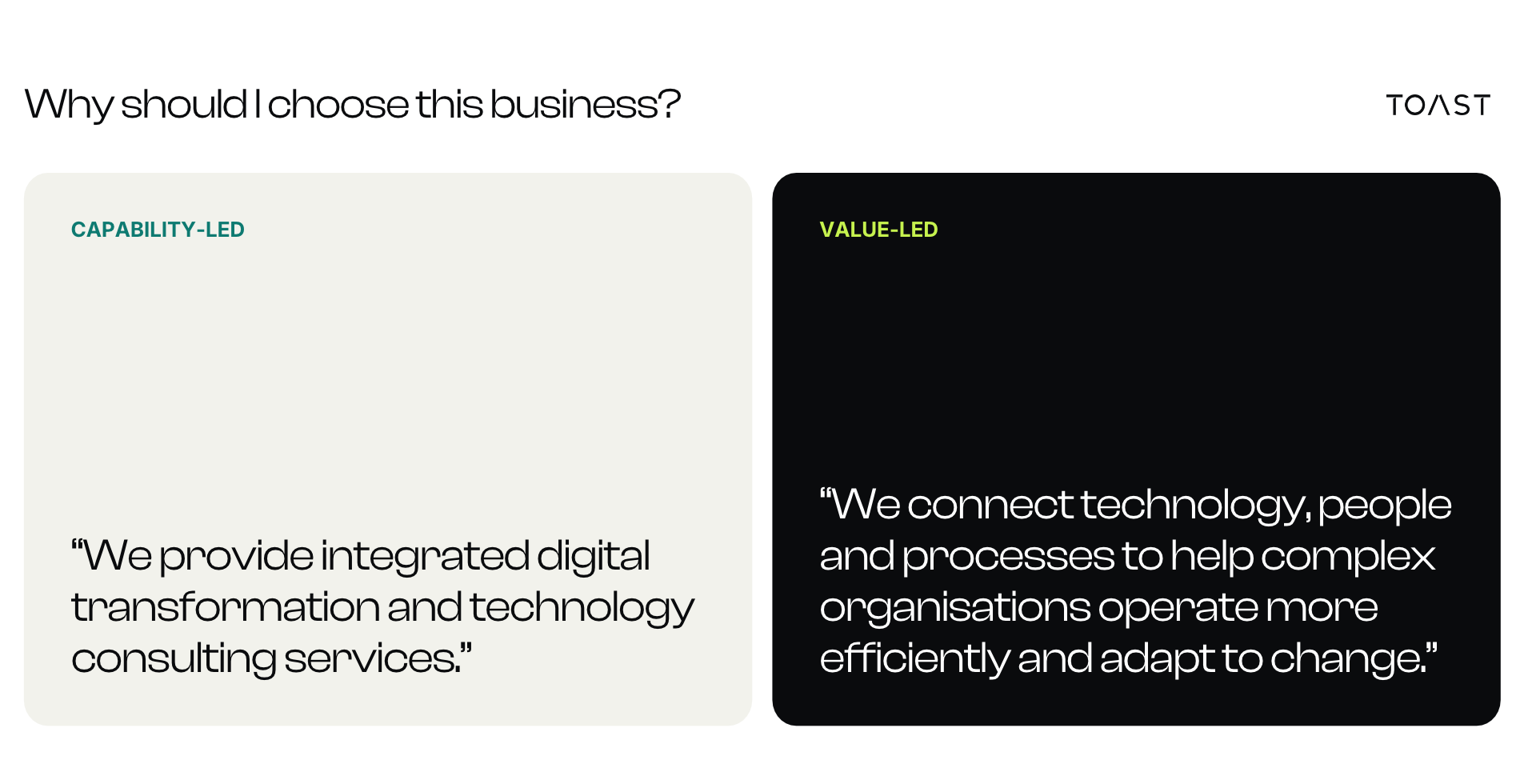
The first explains the service category.
The second communicates the potential business value.
A clear messaging hierarchy should work across three levels:
Corporate positioning: What the organisation stands for, the value it creates and why it matters.
Sector and solution messaging: How that value translates into specific customer challenges, industries and services.
Supporting evidence: The capabilities, methodologies, experience and outcomes that make those claims credible.
This creates consistency without forcing every page to repeat the same corporate narrative.
It also allows different audiences to engage with the level of technical detail they need.
5. Design B2B buyer journeys around how decisions are actually made
B2B purchasing decisions are rarely immediate.
Prospective customers may research providers for weeks or months, compare different approaches, seek internal approval and assess commercial risk before making contact.
In complex organisations, multiple stakeholders may visit the website at different stages of the decision-making process.
A technical specialist might be assessing capability. A commercial director may be reviewing project outcomes. A procurement team may be looking for credentials and delivery assurance.
A successful B2B website needs to support these different requirements.

Awareness: Understanding the problem
At the early stage, visitors may be exploring a business challenge or researching potential solutions.
Relevant content might include industry insights, educational articles, thought leadership and high-level solution overviews.
Consideration: Evaluating expertise
As buyers begin comparing potential partners, they need more detailed evidence.
This may include service information, industry-specific experience, case studies, team expertise and explanations of the organisation's approach.
Decision: Building confidence to engage
When buyers are ready to take the next step, the website should make engagement straightforward.
Clear contact pathways, relevant credentials, consultation opportunities and accessible information about the process can help reduce uncertainty.
Importantly, these journeys aren't always linear.
A returning visitor may move between case studies, services and insights several times before making an enquiry.
The role of UX strategy is to create logical connections between content and actions, allowing buyers to move forward at their own pace.
The objective isn't to force a conversion. It's to build the confidence that makes conversion more likely.
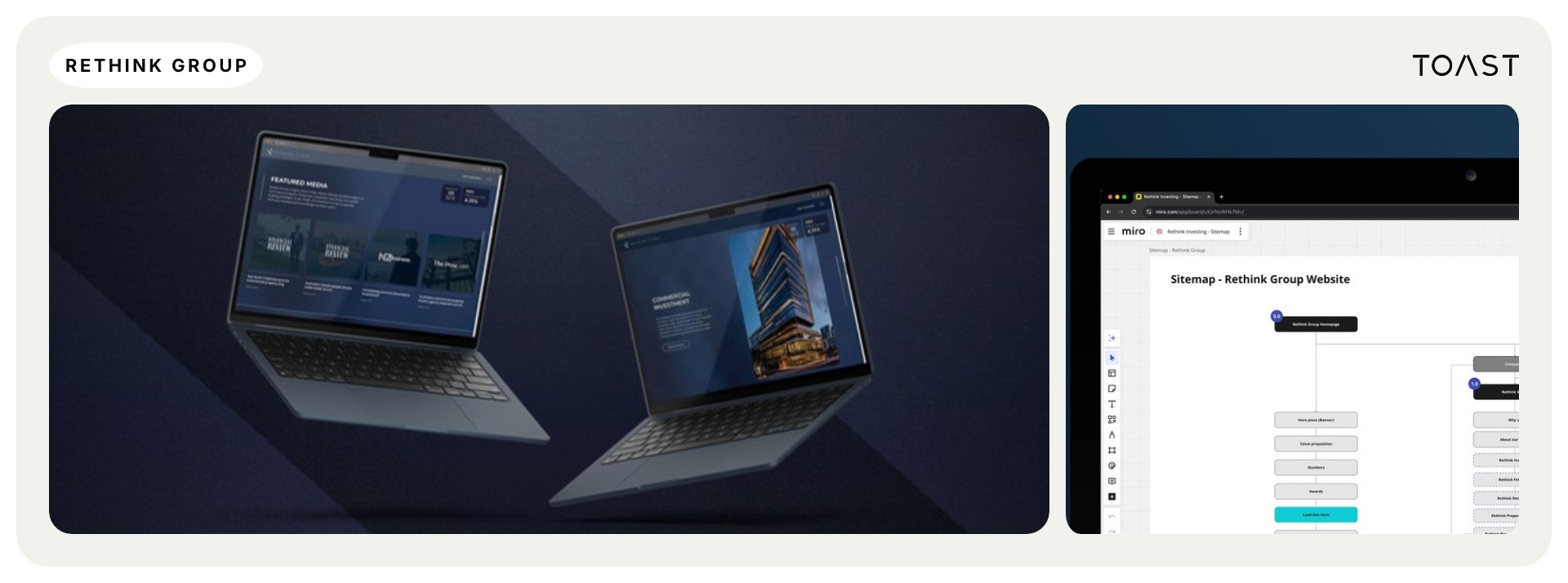
Case study: Rethink Group
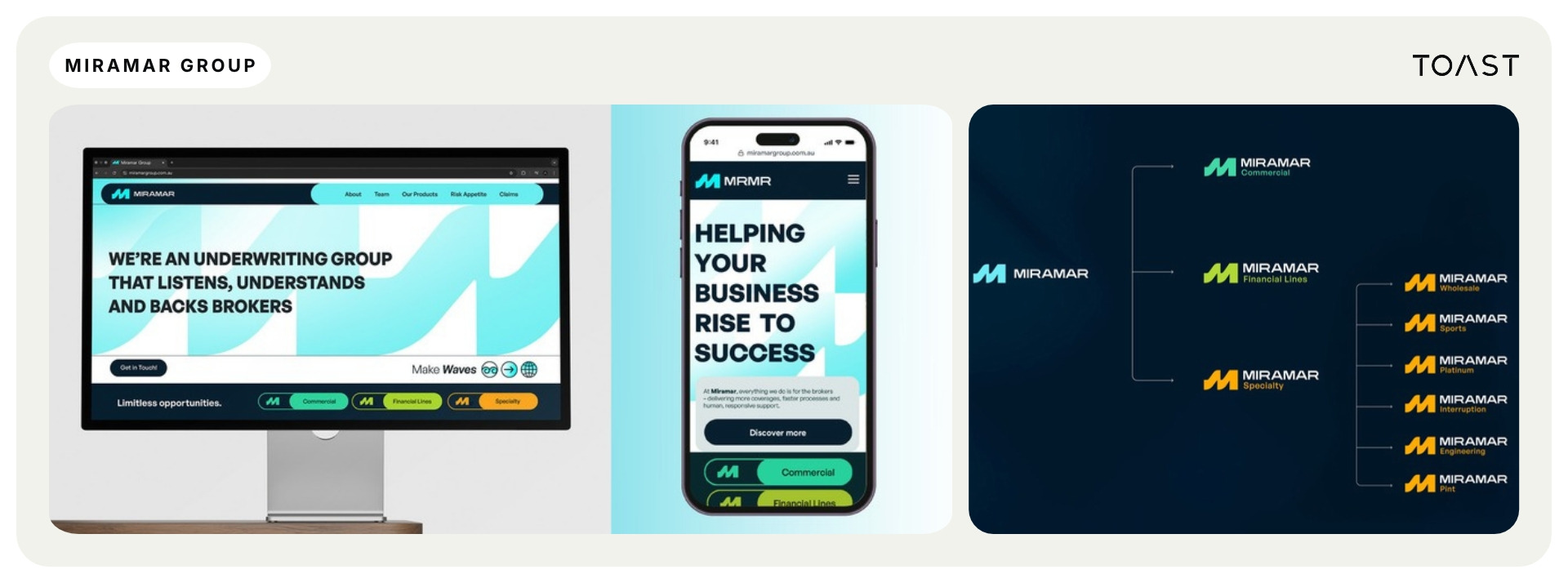
Case study: Miramar Group
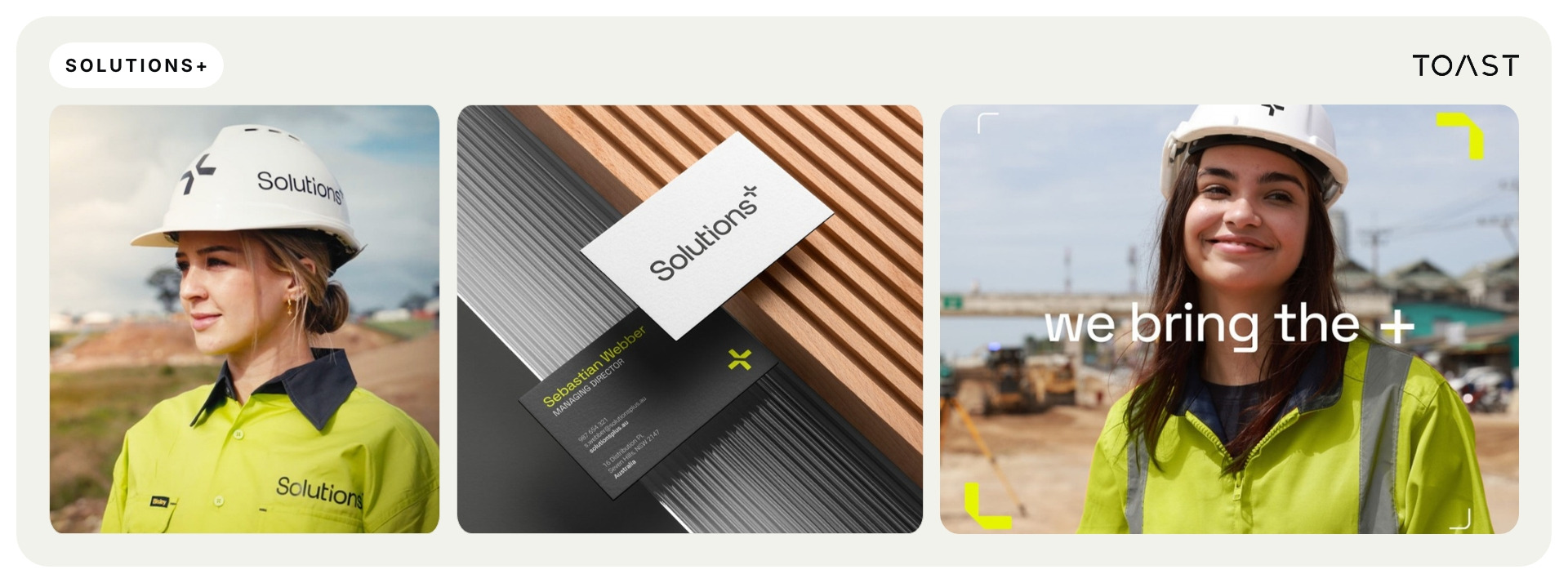
Case study: Solutions+
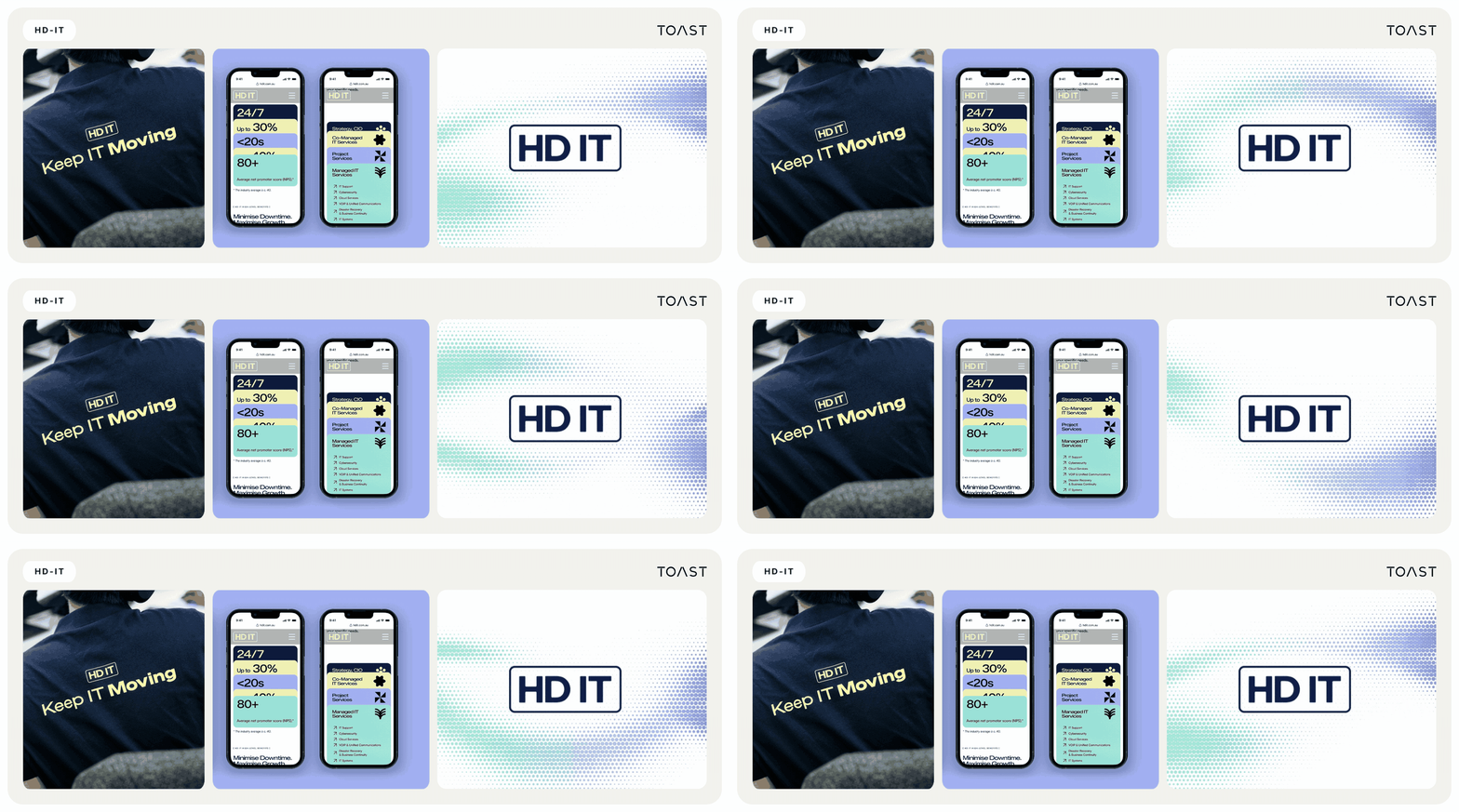
6. Connect website content with SEO and answer engine optimisation
The way B2B buyers discover and research potential partners is changing.
Traditional search engines remain important, but AI-powered platforms such as ChatGPT, Claude, Perplexity and Google's AI search experiences are increasingly part of the research process.
This means B2B website strategies need to consider both search engine optimisation (SEO) and answer engine optimisation (AEO).
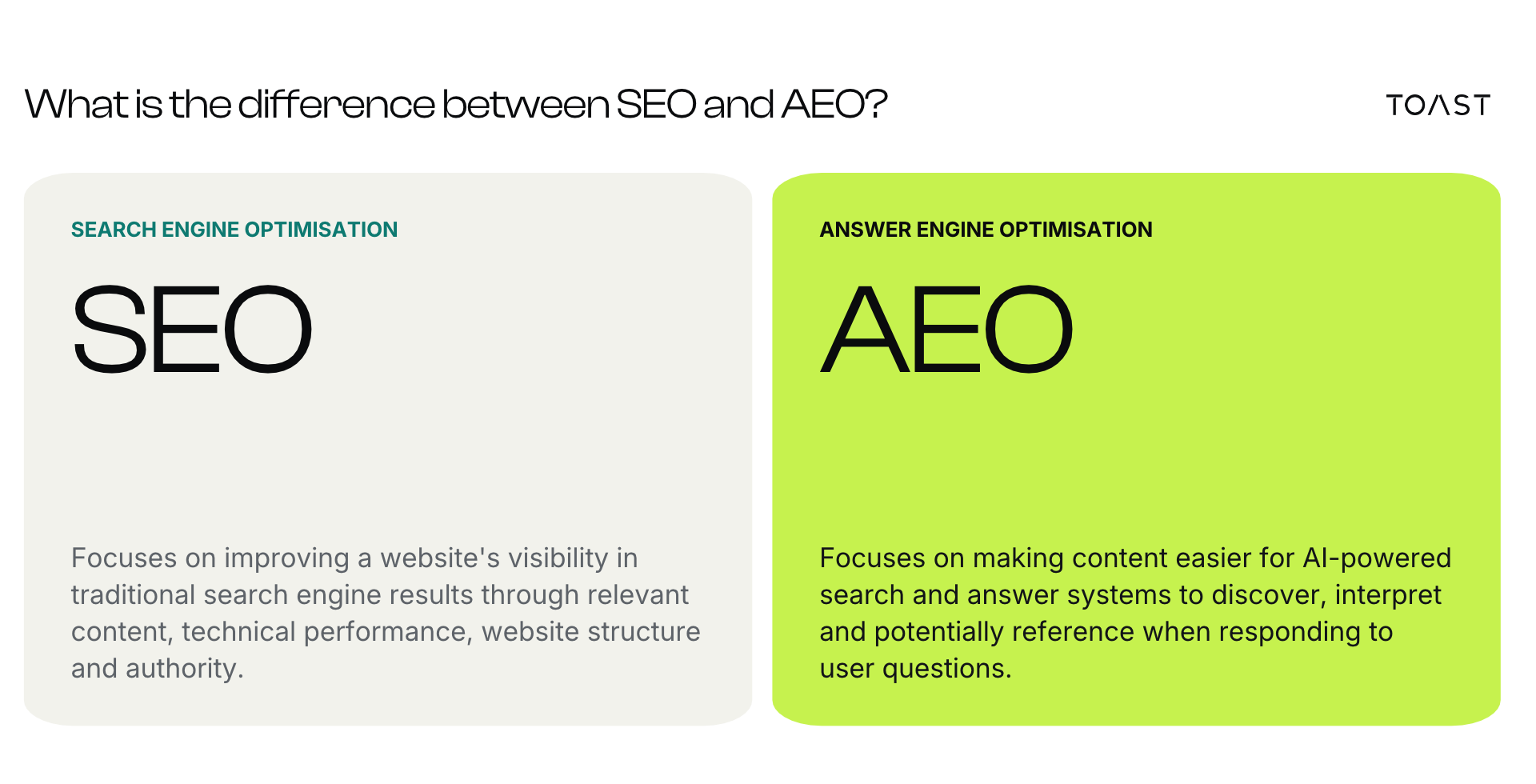
What is the difference between SEO and AEO?
SEO focuses on improving a website's visibility in traditional search engine results through relevant content, technical performance, website structure and authority.
AEO focuses on making content easier for AI-powered search and answer systems to discover, interpret and potentially reference when responding to user questions.
Both benefit from many of the same foundations: clear information architecture, relevant expertise, credible content and strong technical performance.
For complex B2B businesses, an effective approach includes:
- Clear service and solution pages that explain capabilities and outcomes.
- Authoritative content addressing real customer questions.
- Industry-specific insights demonstrating subject-matter expertise.
- Case studies supported by credible evidence.
- Consistent terminology and well-structured content.
- Internal links connecting expertise, services and commercial opportunities.
- Appropriate structured data and technically accessible website content.
AEO is not simply about inserting questions into pages or repeating keywords.
It's about making genuine expertise easier to understand, verify and reference.
A strategically structured website creates a stronger foundation for both human buyers and AI-assisted discovery.
7. Bring UX, UI and technology together
Website strategy defines what the digital experience needs to achieve.
UX and UI design determine how that experience works and how the brand comes to life.
Technology provides the foundation for delivering, managing and improving it.
These disciplines need to work together.
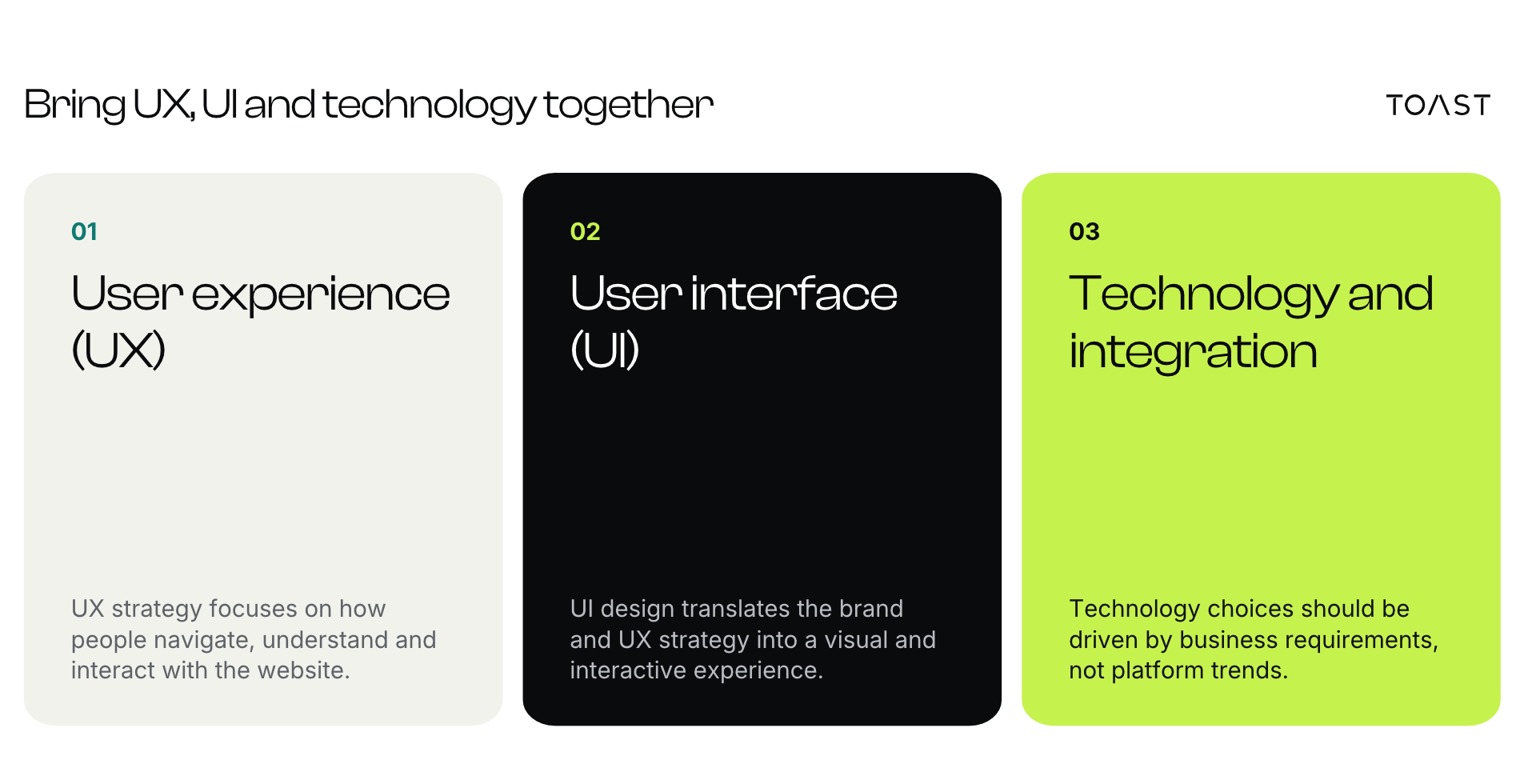
User experience (UX)
UX strategy focuses on how people navigate, understand and interact with the website.
It considers user needs, content pathways, navigation, usability, accessibility and conversion opportunities.
For complex B2B businesses, effective UX is particularly important because it reduces the effort required to understand sophisticated offerings.
User interface (UI)
UI design translates the brand and UX strategy into a visual and interactive experience.
Typography, layout, imagery, hierarchy, components and interaction design should reinforce the brand's positioning while making the website intuitive and engaging.
Technology and integration
Technology choices should be driven by business requirements, not platform trends.
The right content management system, CRM integrations, forms, analytics and marketing automation should support the organisation's operational capabilities and future growth.
A sophisticated platform isn't necessarily the best solution if it introduces unnecessary complexity or limits the marketing team's ability to manage content.
At TOAST, we believe the strongest digital outcomes come when strategy, design and technology are considered as one connected experience.
8. Measure website performance against business outcomes
A successful website launch isn't the end of the project.
It's the beginning of an ongoing process of learning, refinement and optimisation.
Many B2B organisations measure website performance through traffic, page views and engagement.
These metrics have value, but they don't necessarily demonstrate commercial impact.
A strategically aligned website should be measured against the role it plays in business growth.
Relevant performance indicators may include:
- Qualified enquiries from priority industries or customer segments.
- Engagement with strategically important services and solutions.
- Conversion rates across key user journeys.
- Case study and credentials engagement.
- Organic search visibility for relevant commercial topics.
- Referral traffic and engagement from target accounts.
- CRM-attributed opportunities and pipeline contribution.
- Improvements in lead quality and sales engagement.
The right measures depend on the organisation's business model and sales process.
For a consulting business, qualified discovery conversations may be the most meaningful indicator.
For an enterprise technology company, engagement from target accounts and progression into sales opportunities may matter more.
A website should be measured by how effectively it supports the business, not simply how many people visit it.
What should a B2B website strategy include?
A comprehensive B2B website strategy should establish the decisions that guide design, development and ongoing digital performance.
- Business discovery: Understand growth ambitions, challenges and commercial priorities.
- Brand alignment: Connect positioning, value proposition and messaging to the digital experience.
- Market and audience research: Identify customer needs, motivations and decision-making behaviours.
- Website audit: Evaluate existing content, UX, technology and performance.
- Information architecture: Create a logical structure around customer needs and business priorities.
- Content and messaging strategy: Define what needs to be communicated, to whom and why.
- UX strategy and prototyping: Plan and validate navigation, pathways and user interactions.
- UI and visual design: Translate the brand into a distinctive, consistent digital experience.
- Technology strategy: Define platform, functionality, integration and scalability requirements.
- SEO and AEO foundations: Improve discoverability, content clarity and technical accessibility.
- Measurement framework: Connect digital performance with meaningful business outcomes.
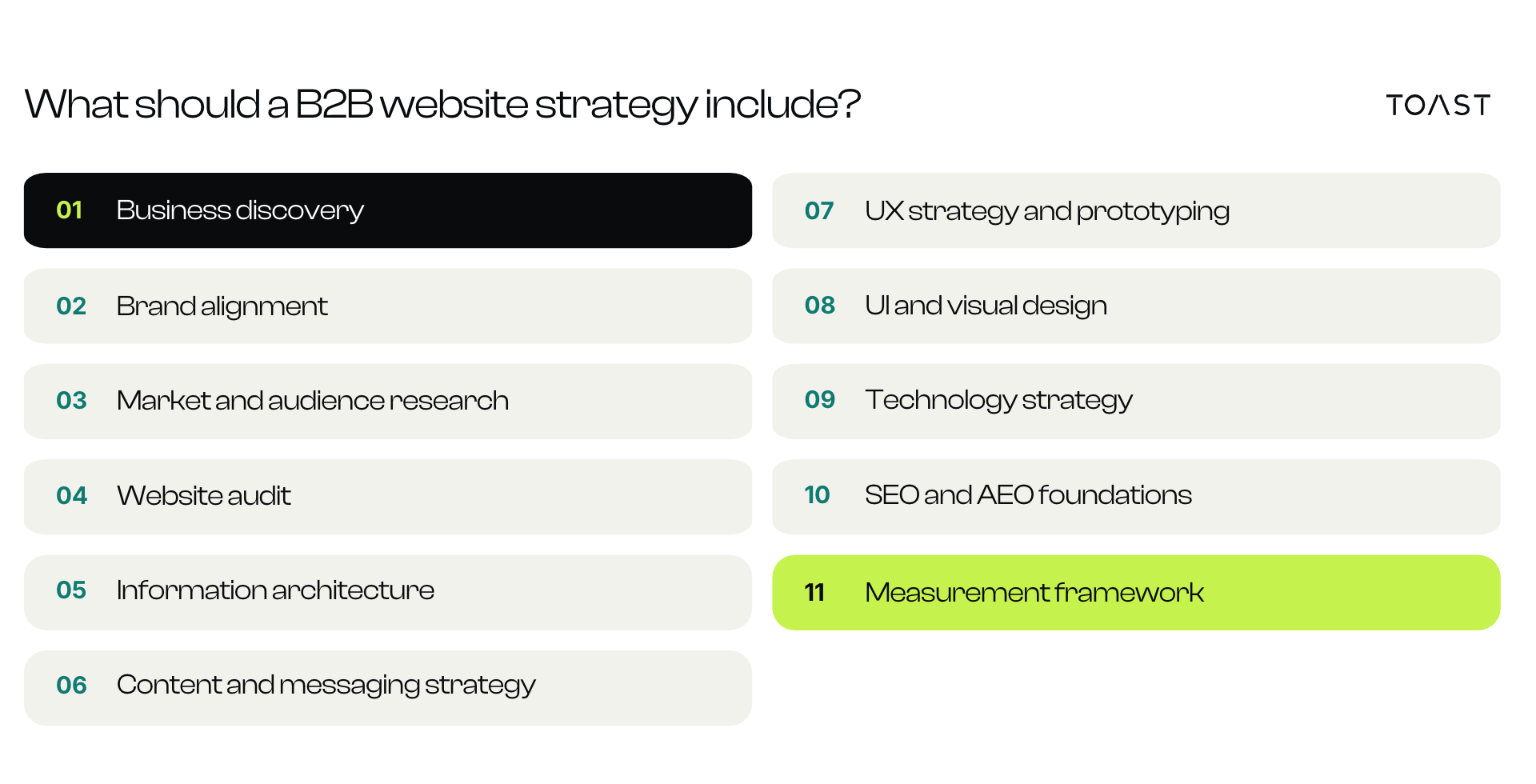
These components should form a connected process rather than a collection of isolated deliverables.
How do you know when your B2B website needs a new strategy?
A website may need strategic review when the business has evolved beyond the structure, messaging or experience of its existing digital platform.
Common indicators include:
- The website no longer reflects the organisation's current positioning or ambitions.
- New services, acquisitions or business divisions have made the offering difficult to navigate.
- The business is entering new markets or targeting different customer groups.
- The website generates traffic but few qualified opportunities.
- Customers struggle to understand the difference between services or solutions.
- The digital experience feels inconsistent with the quality of the brand.
- Internal teams disagree about what the website should communicate or prioritise.
In these situations, a visual refresh alone may not address the underlying problems.
The more valuable investment is often revisiting the strategic decisions that shape the experience.
Frequently asked questions about B2B website strategy
What is a B2B website strategy?
A B2B website strategy is a plan that defines how a business website will support commercial objectives, communicate brand value, serve target audiences and generate meaningful customer engagement. It guides website structure, messaging, content, user experience, technology and performance measurement.
What is the difference between website strategy and website design?
Website strategy defines what the website needs to achieve, who it needs to serve and how it should support the business. Website design translates that strategy into the visual, functional and interactive experience customers use. Both are essential, but strategy should inform design decisions.
Why is brand strategy important in B2B website development?
Brand strategy defines an organisation's market position, differentiation, value proposition and messaging. When integrated into website development, it helps create a consistent digital experience that communicates the organisation's value and builds confidence with prospective customers.
How can a B2B website generate better-quality leads?
A B2B website can improve lead quality by prioritising the right audiences, clearly communicating relevant services, demonstrating expertise and creating conversion pathways aligned with buyer intent. Integrating website analytics with CRM data can also help identify which digital interactions contribute to qualified opportunities.
How long does B2B website strategy and development take?
Timelines depend on the complexity of the organisation, the size of the website, research requirements, integrations and content readiness. A relatively focused website may take a few months, while a large, multi-service or enterprise-level digital transformation can require a longer, phased approach. Strategic discovery should establish a realistic roadmap before design and development begin.
How often should a B2B website strategy be reviewed?
B2B organisations should regularly assess website performance and review the underlying strategy when business priorities, target markets, brand positioning or customer needs change. A formal annual review, supported by ongoing performance optimisation, provides a practical starting point.
Build a website that reflects where your business is going
The most effective B2B websites aren't built around pages, features or design trends.
They're built around a clear understanding of the business, its customers and the opportunities ahead.
When business strategy, brand positioning, user experience and technology are aligned, a website becomes more than a digital presence.
It becomes a platform for communicating value, building confidence, strengthening relationships and supporting commercial growth.
For complex B2B organisations, that alignment can make the difference between a website that simply exists and one that creates meaningful business value.
Partner with TOAST to connect brand, business and digital
At TOAST, we're strategic brand makers for complex B2B businesses.
We help ambitious organisations translate their business strategy and brand positioning into connected digital experiences that make complex offerings easier to understand, navigate and engage with.
Our approach brings together business discovery, research, brand strategy, information architecture, UX/UI design, website development and digital performance.
We don't believe in designing websites in isolation.
We believe in creating digital experiences that reflect the ambition of the business, strengthen its market position and support the next stage of growth.
Is your website keeping pace with your business?
Book a discovery call with TOAST and explore how a more strategic approach to digital could support your growth.







TOAST acknowledges the Gadigal people of the Eora Nation, the traditional custodians of the land on which our agency stands. We celebrate the stories, culture and traditions of Aboriginal and Torres Strait Islander Elders of all communities who also work and live on this land.
