




.svg)
8 Branding Services Business Services Firms Should Review
For Australian business services firms, branding is about much more than creating a new logo.
Your brand shapes how prospective clients understand your expertise, what differentiates your firm and why they should trust you over a competitor.
As a business grows, its services, audiences and ambitions often evolve faster than its brand. The result can be an unclear offer, inconsistent messaging and an identity that no longer reflects the quality or direction of the business.
Before choosing a branding agency, marketing and business leaders should review these eight essential branding services.
1. Brand research and discovery
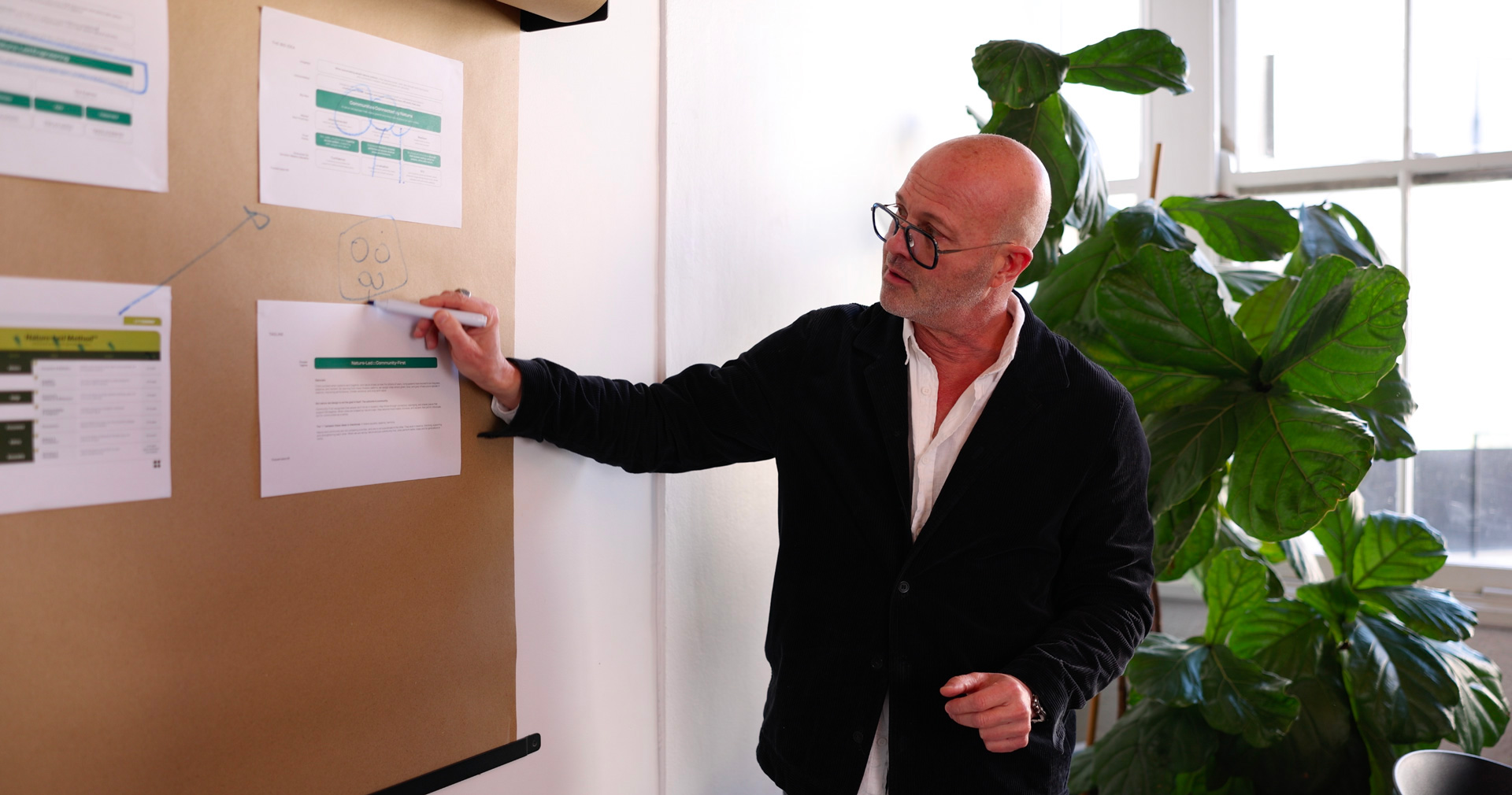
Effective branding starts with understanding the business, its market, its customers and how the brand is currently perceived.
Brand research and discovery may include:
- Leadership and stakeholder interviews
- Employee interviews
- Client and customer research
- Competitor analysis
- Market and category reviews
- Brand audits
- Customer journey analysis
- Existing marketing and communications reviews
This process identifies where the brand is strong, where there is confusion and where opportunities exist to create a more distinctive and relevant market position.
Without research, branding decisions can become subjective. With the right evidence, they can support clear strategic and commercial goals.
2. Brand strategy
Brand strategy defines what the business stands for, where it is going and how it should compete. A strong brand strategy may define:
- Purpose
- Vision
- Positioning
- Value proposition
- Brand promise
- Brand personality
- Competitive difference
- Strategic brand principles
For business services firms, this is particularly important because the offer can be complex, intangible or difficult to differentiate.

The strategy should give prospective clients a clear reason to choose the business while giving leadership, marketing and sales teams a consistent foundation for growth.
3. Brand architecture
As firms grow, they often add new services, divisions, locations, products or specialist teams.
Brand architecture determines how these offers relate to one another and how the overall business should be presented to the market.
It can help answer questions such as:
- Should every service sit under one master brand?
- Do specialist divisions require separate identities?
- How should acquired businesses be incorporated?
- Which names should be retained, changed or retired?
- How should services be grouped?
- How can clients understand the complete offer?
The right architecture makes a complex organisation easier to understand and provides a structure that can accommodate future growth.

4. Audience and customer strategy
A brand cannot communicate effectively if it tries to speak to everyone in exactly the same way.
Audience strategy identifies priority clients, customer groups, decision-makers and influencers. It considers what they need, the problems they are trying to solve and what gives them confidence in choosing a business services partner.
For many B2B organisations, the buying process involves several stakeholders with very different priorities, from procurement teams and technical specialists to executives and business owners.
Understanding these audiences helps shape positioning, messaging, content, digital experiences and the wider customer journey.
5. Brand messaging and verbal identity
Many business services firms struggle to clearly explain what makes them different.
Their websites, presentations and proposals often rely on similar claims about experience, service, people and results. Without a distinctive message, even a highly capable firm can sound interchangeable with its competitors.
A strong messaging and verbal identity system may include:
- Core brand story
- Key value propositions
- Audience-specific messaging
- Service propositions
- Proof points
- Tone of voice
- Headlines and supporting language
- Elevator pitch and key company descriptions
This creates a consistent way for leadership, marketing and sales teams to communicate the value of the business.
6. Creative brand platform and visual identity
Strategy needs to translate into a distinctive creative idea.
A creative brand platform connects the strategic thinking behind the brand with how it looks, feels and communicates in the market.
From this platform, the visual identity system may include:
- Logo and brandmarks
- Colour palette
- Typography
- Photography and image direction
- Illustration
- Graphic devices
- Iconography
- Motion principles
- Document and presentation styles
- Digital design principles
A strong identity should do more than look contemporary. It should express the character and ambition of the organisation, differentiate it from competitors and create recognition across every important touchpoint.
For business services firms, credibility matters. But credibility does not have to mean looking conservative or blending into the category.
.gif)
7. Brand guidelines and applications
A brand only creates value when people can use it consistently.
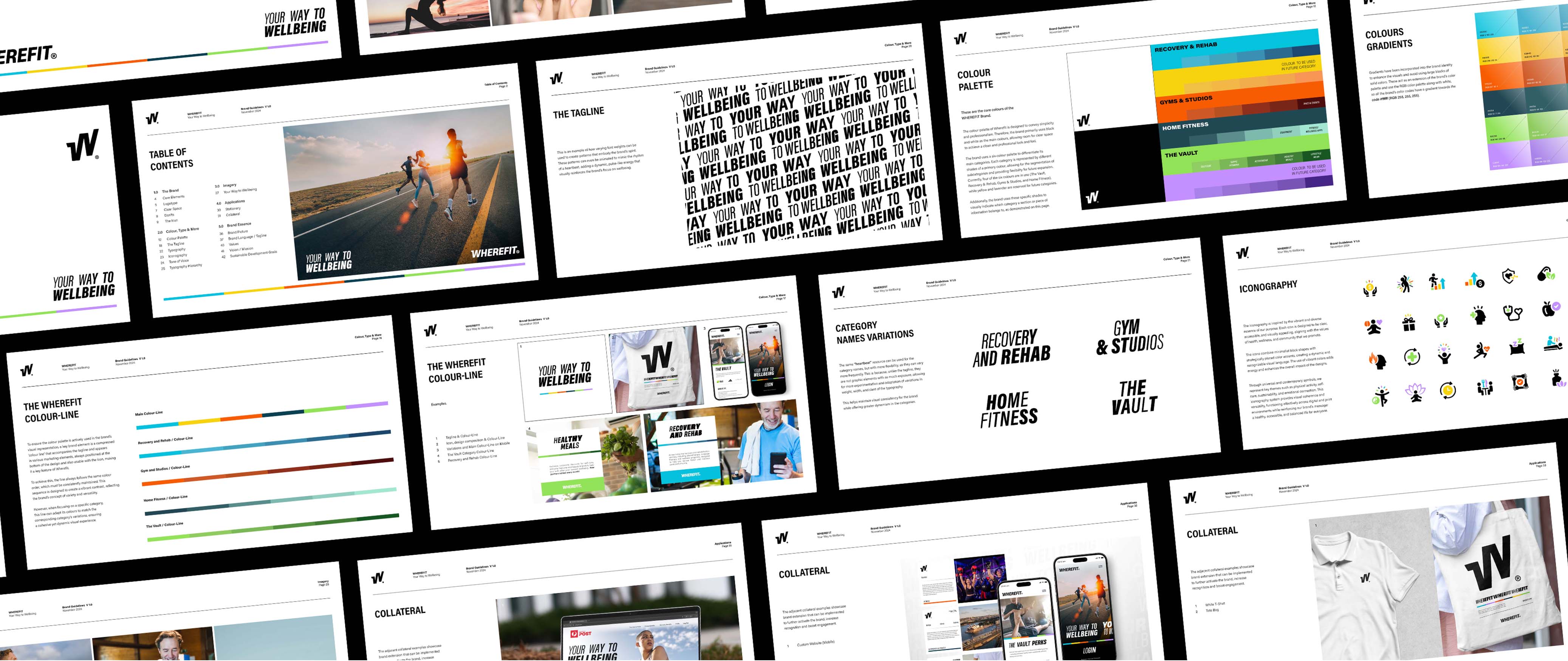
Brand guidelines document how the strategy, messaging, identity and tone of voice should be applied across the organisation.
Practical brand applications and templates may include:
- Proposal templates
- Presentation decks
- Reports
- Social media assets
- Email signatures
- Marketing collateral
- Digital advertising templates
- Internal communications
- Sales materials
- Website and digital design systems
Good guidelines should make the brand easier to manage, not more complicated.
They should give internal teams and external partners enough structure to maintain consistency while allowing the brand to evolve.
8. Brand rollout and implementation
Launching a new brand is more than a design exercise. For established organisations, it can be a significant business-wide change program.
A rollout plan should identify where the brand appears, what needs to change, what should be prioritised and who is responsible for each part of the transition.
This may cover:
- Website and digital platforms
- Sales and marketing materials
- Client communications
- Office and environmental signage
- Internal systems
- Recruitment materials
- Social media
- Launch campaigns
- Employee engagement and training
- Internal brand launches
For larger firms, implementation may need to happen across multiple offices, regions, service divisions or digital platforms.
Planning implementation early helps manage costs, reduce inconsistency and build internal support for the new brand.
How do these branding services work together?
The strongest branding programs do not treat research, strategy, messaging, identity and implementation as disconnected activities.
Each stage should inform the next.
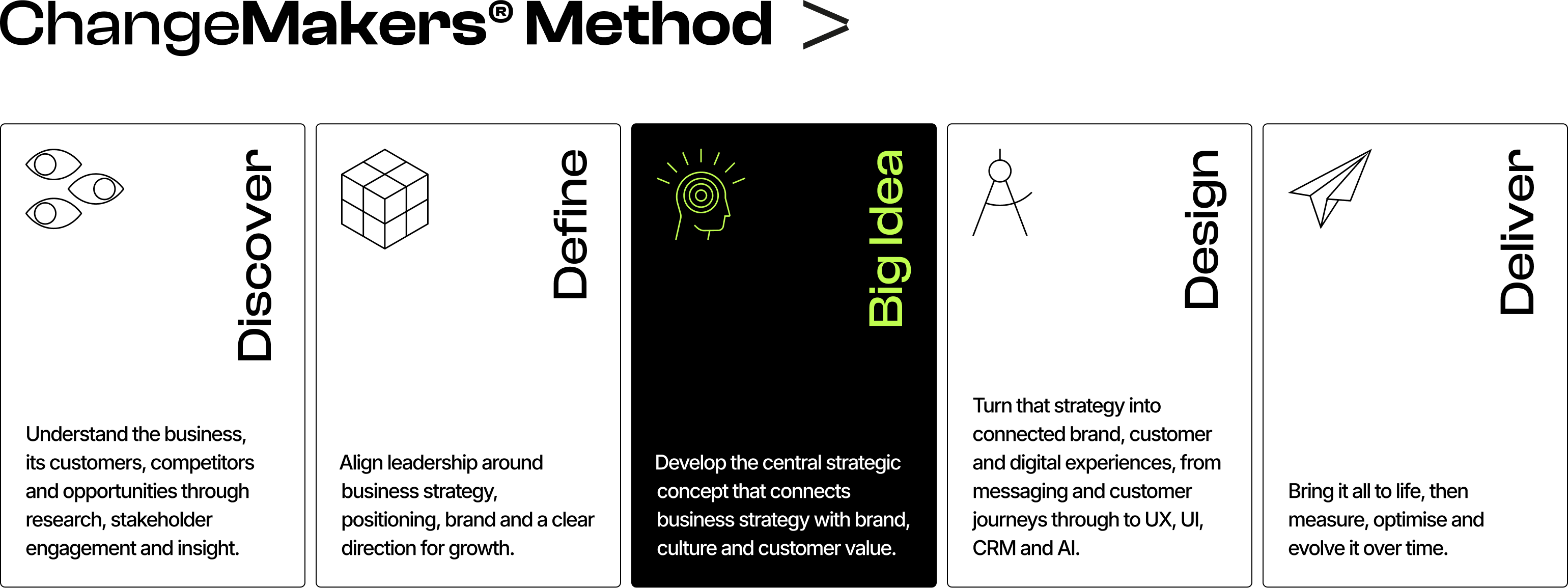
At TOAST, we bring these disciplines together through THE CHANGEMAKERS METHOD®, our structured approach to brand transformation:
Discover
Understand the business, market, customers, competitors and opportunities through research and discovery.
Define
Establish the strategy, positioning, audiences, architecture, value proposition and messaging that will guide the brand.
Big Idea
Develop the central creative platform that turns strategy into a distinctive idea the organisation can own.
Design
Translate the strategy and Big Idea into a complete verbal and visual brand system.
Deliver
Apply, launch and embed the brand across the organisation, its people, communications and customer touchpoints.
This creates a clear connection between business strategy and what customers ultimately see and experience.
How should business services firms choose a branding agency?
When comparing Australian branding agencies, make sure each proposal covers the same strategic and creative requirements.
One agency may be quoting for brand identity design alone. Another may include research, strategy, architecture, messaging, creative development, implementation and launch support.
Ask each agency:
- What business problem will this project solve?
- What research will inform the strategy?
- How will the brand strategy connect with our business strategy?
- Who will actually work on the project after the pitch?
- How will leadership and key stakeholders be involved?
- What branding services are included in the scope?
- How will the creative idea be developed?
- What tools will our internal team receive?
- How will the brand support future growth?
- How will implementation be managed?
- What is excluded from the fee?
The right branding partner should connect strategy, creativity and implementation to the organisation's wider business goals.
Because the objective is not simply to change how the business looks.
It is to clarify what the business stands for, strengthen how it competes and create a brand capable of supporting its next stage of growth.
Is your brand ready to support where your business is going?
Talk to TOAST about your next brand transformation.
Book a Discovery Call




.svg)