We would love to hear about your Project
Get In Touch
Follow Us


Brand & Engagement
|
November 10, 2026
|
5 MIN READ
How to Build a Brand in the Era of AI
When it comes to advertising, AI can be a bit of a black box.
Every day, we’re inundated with jargon-laden and acronym-embellished advice. Self-proclaimed experts flood our feeds, each promising to “100x your ROI” and “revolutionise your workflow”, while offering little concrete clarity on the subject.
It’s an overwhelming time for marketers. And it’s difficult to know which AI practices are genuinely useful, and which are simply a sophisticated distraction.
For us at TOAST, a simple yardstick is whether it actually drives growth. With that criteria in mind, we believe there are two big opportunities for brands: one at the point of production, the other at the point of consumption.
Let’s explore where AI can genuinely remove delays, improve quality and, yes, even multiply your ROI.

Section 1: Creating with AI
How to Generate Premium Ads (Without the Premium Costs)
It’s no secret that AI can help you create beautiful assets more efficiently and cost-effectively.
Instead of paying for a photographer, videographer, production crew, studio and eye-watering flights, you can access a whole team of creatives (quite literally) at your fingertips.
But we hasten to add, those time-old craft skills still matter. Much like a state-of-the-art racing car, if you don’t have a qualified driver (a.k.a. a creative) at the wheel, you’ll probably go off-track.
Here’s how to guide your AI the right way, so you get the right results.
1. Understand your Platform
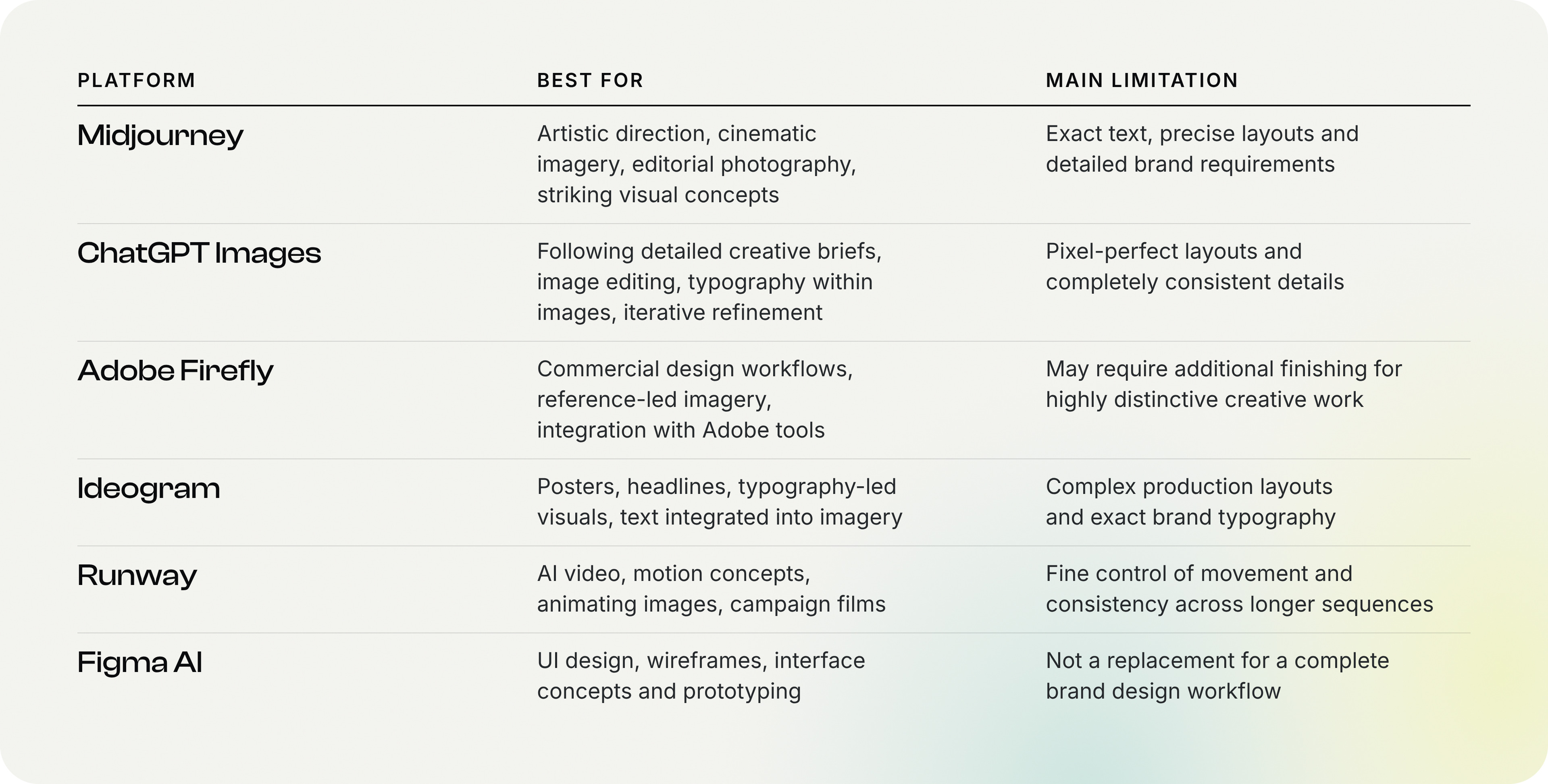
Not all AIs are made equal. Each platform works to a different algorithm, a hidden language you need to understand to get the most out of it.
Learn what your chosen platform does well, where it falls short and how to work with it. The better you understand the tool, the more you'll get out of it.
Here’s a simple table summarising the differences between platforms:
2. Cultivate Good Taste
AI can create ads. But who’s judging whether it’s actually good? You.
You’ll need to sift through the work and refine the output until it’s great. So study world-class ads, learn what makes for a good bit of copy and design, understand the principles of advertising effectiveness, and follow smart people with genuine expertise in this space.
A few names for you to follow on social media: Paula Scher, Vikki Ross, John Hegarty, Rory Sutherland, Mark Ritson, Julian Cole, Mark Pollard, Nils Leonard, George Lois.
A few publications, too: D&AD, Lurzer’s Archive, Love the Work More, It’s Nice That, Creative Review, Behind the Billboard.
3. Storytelling is (Still) Everything
Visual pyrotechnics will only get you so far. You still need to connect with real customers, communicate with real insight and speak to real emotions.
Start with what the ad needs to make people feel. Then use AI to bring that to life.
And understand the mechanics of a tale well told. Freytag’s Pyramid offers a simple structure to keep people hooked till the very end: exposition, rising action, climax, falling action, denouement.
4. Know the Brand You’re Working With
Research, research, research as much you can about the brand and business. And put all that context into your AI chat.
Upload guidelines, customer personas, tone of voice principles, competitor reviews, annual reports, everything you can to get the LLM up to speed on who you are, who you’re talking to and who you’re up against.
That way, the AI is far more likely to produce a result that’s on-brief and on-brand.
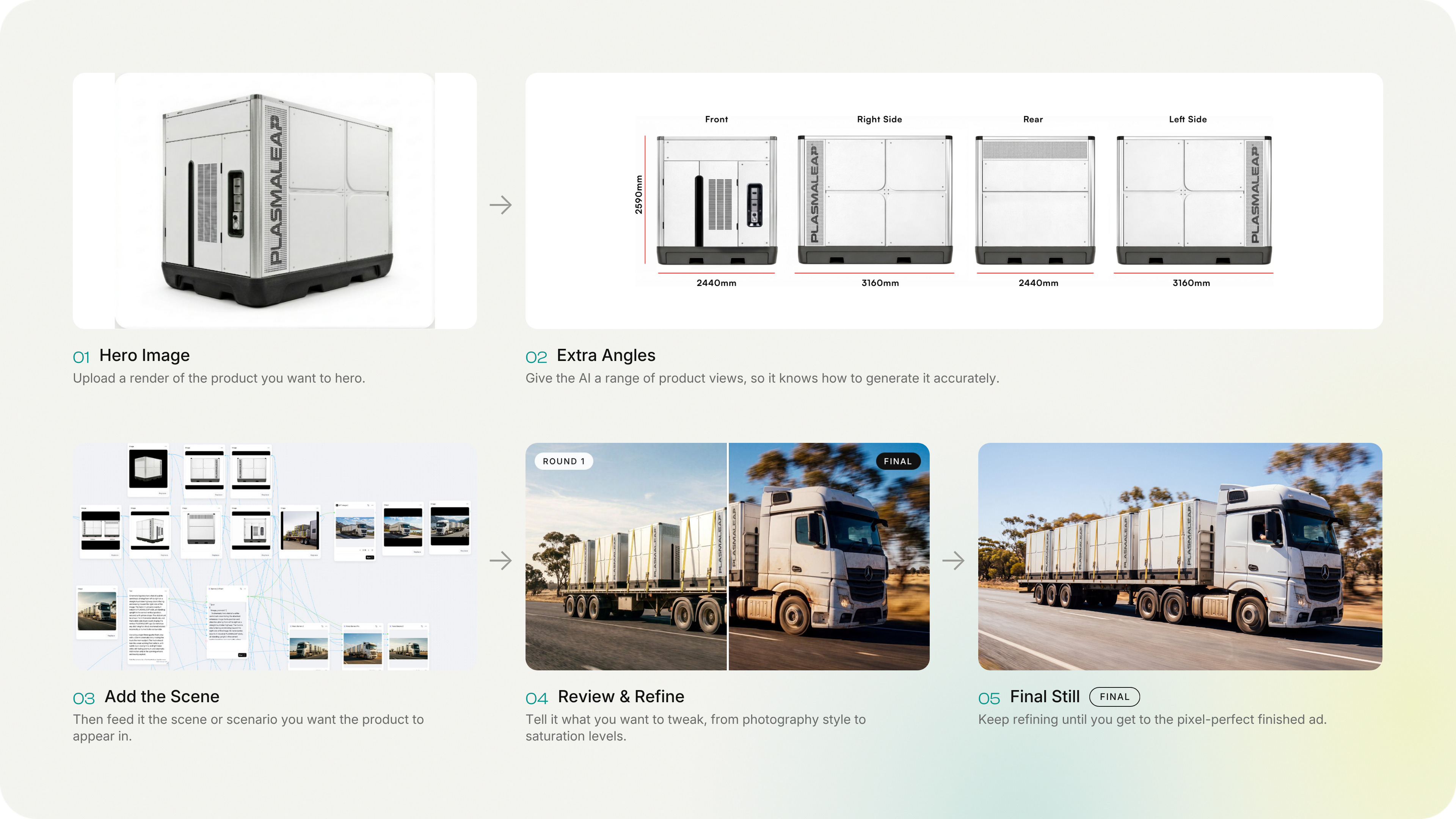
And make sure the product is accurate, too. Upload the right renders, ideally real images if you can get your hands on them, and use that as a starting point for what you make.
Speaking of which, here’s a useful prompting process our Senior AI Designer Coco has prepared to build your product into any scenario:
CASE STUDY
PlasmaLeap
Product Demo: Unpacking an Unknown Innovation
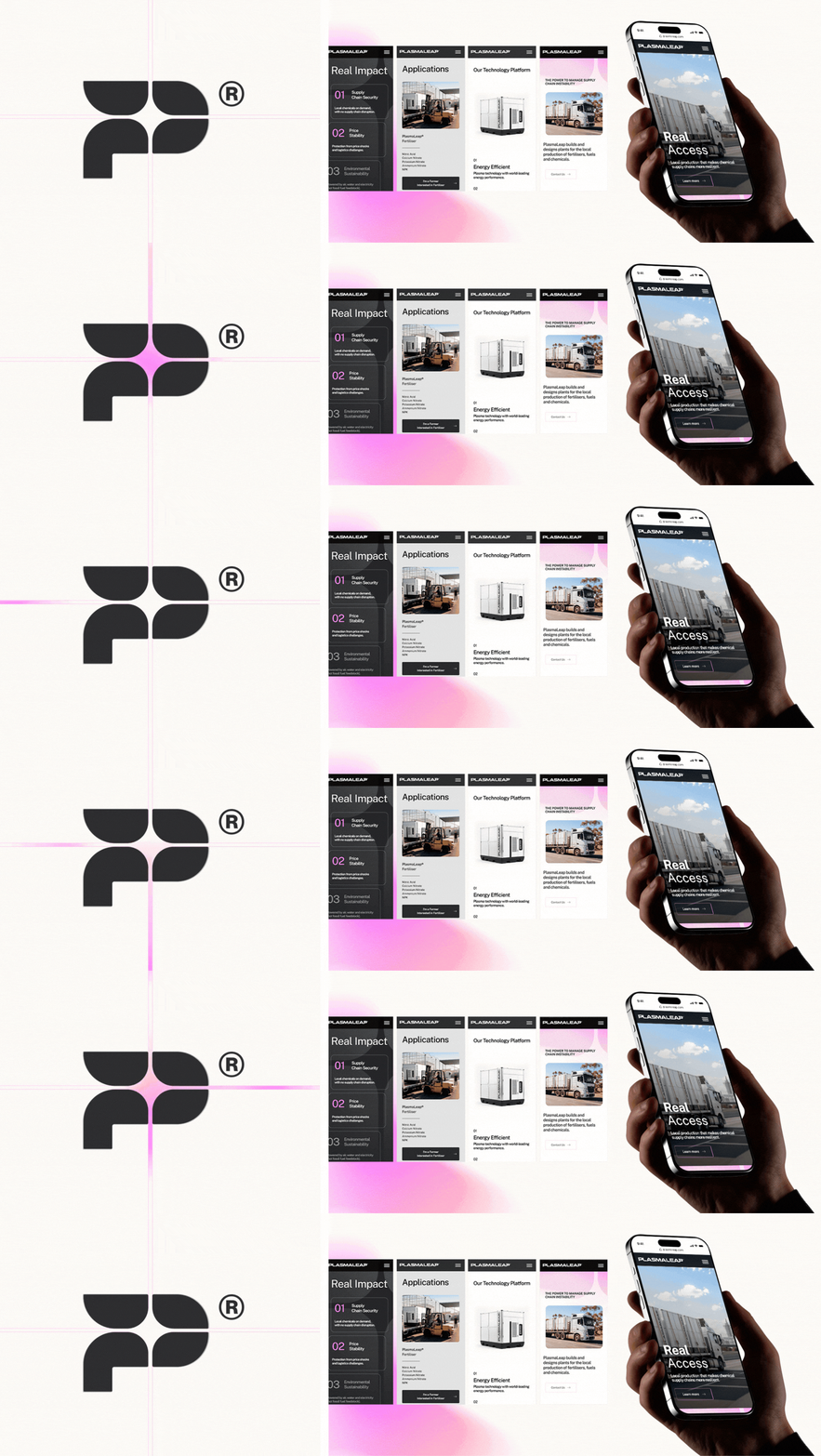
PlasmaLeap are pioneering an incredible innovation: locally deployable generators that allow businesses to make the chemicals they need, freeing them from volatile international supply chains.
But the problem was: it was hard for investors and customers to understand how this new technology worked, undermining trust and confidence. Enter our Senior Designer Coco and his creative partner, ChatGPT. By taking the renders PlasmaLeap had sent us, and artfully prompting it into a storyboard, we demonstrated where the generators could be used, how they were transported and how they could be installed, answering clients’ many practical questions about this new innovation. Because when it comes to trust, seeing is believing.
Section 2: Creating for AI
Top of the Bots: Building a Brand for AI Search
Artificial engine optimisation (or AEO for short): the other end of the spectrum that’s being totally transformed by the presence of LLMs.
More and more, people are asking AI to help them decide what to buy.
As the consultancy 21st Century Brand has reported, almost 50% of people now begin the majority of their web searches using AI, and organic search is projected to decline by 50% by 2028.
Which means you need to make sure your business is regularly getting recommended in these kinds of enquiries. Otherwise, you’ll lose your spot in the shortlist to more AI-savvy competitors.
What AI Looks For
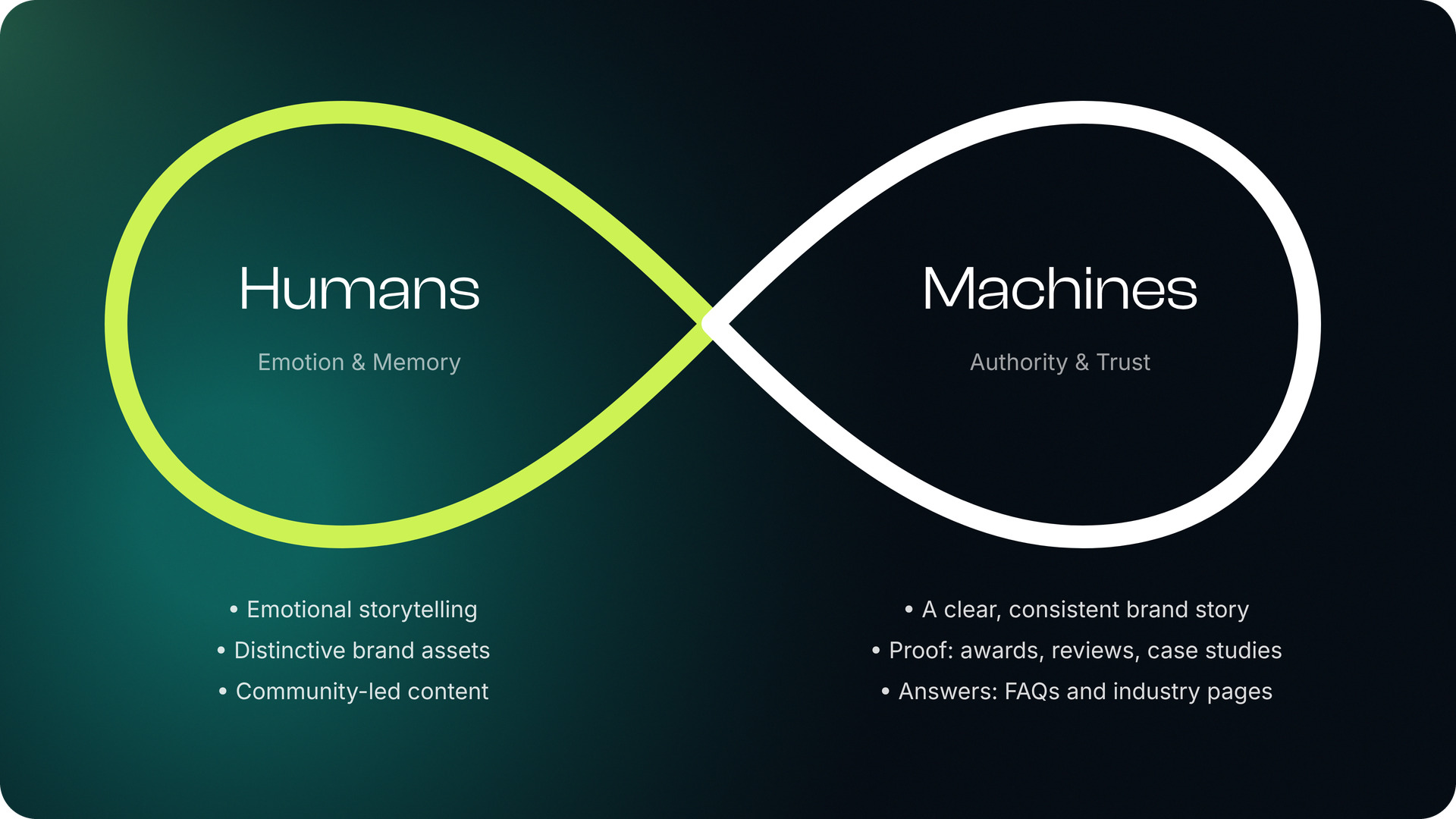
Unlike us emotion-driven human beings, AI takes a more rational, evidence-based approach to recommending businesses.
It looks for solid proof that you’re a capable and reliable business. That your customers trust you, that you’re experienced and, most interestingly of all, that your promises align with your actions.
Long story short, there’s no hiding under the bright light of AI search. Here’s the criteria it tends to use:
1. Coherence
As Kantar reports, AI looks for a consistent and distinctive narrative about what your business does and the promise it delivers for customers.
It looks for evidence of this story everywhere: not just your website, but on social media, online forums (e.g. Reddit), review platforms, the works, all distilled into a simple answer at the push of a prompt.
So get your story straight, and repeat it across all manner of channels, especially your website (e.g. the Home and About pages).
2. Credibility
Because AI draws from real customer reviews, not just the well-crafted boilerplate copy on your website, it means your brand needs to live up to its promise.
If you have a great brand proposition, but customers deliver a different verdict about the quality of your products or service, you could find your business falling off AI’s recommendation shortlist.
AI also looks at endorsements from your category’s most credible sources: the news outlets, think tanks and thought leaders who set the agenda in your industry. Like a sharp-minded academic, the LLM will look for corroboration, weigh up the reliability of sources, and prioritise the voices that are most authoritative.
The takeaway: say the right things about yourself, but practice what you preach so that others are saying it, too.
3. Cultural Currency
AI is the ultimate trend-scanner. It’s looking for brands that are turning up consistently in current cultural conversations, especially online.
21st Century Brand cites recency and regularity as the two key factors here: when was the last time you showed up in a big conversation within your category? And how frequently are you showing up?
This means your brand needs to tap into trends online, appear in the news, get mentioned in reports and get mentioned organically in forums. It’s all about earned media: creating relevant products and stories that other people can’t help but talk about.
4. Clarity
As technical as it may sound, AI search is really about answering people’s questions. So structure your content in a way that provides clear answers to those queries.
Build out several FAQ sections on your website, each addressing a different area of customer concerns. And generate content calendars grounded in the biggest pain points facing your customers today. All of it helps recommendation engines identify you as an expert of the topic in question.
CASE STUDY
HD IT
A Site that’s Fluent in Large Language
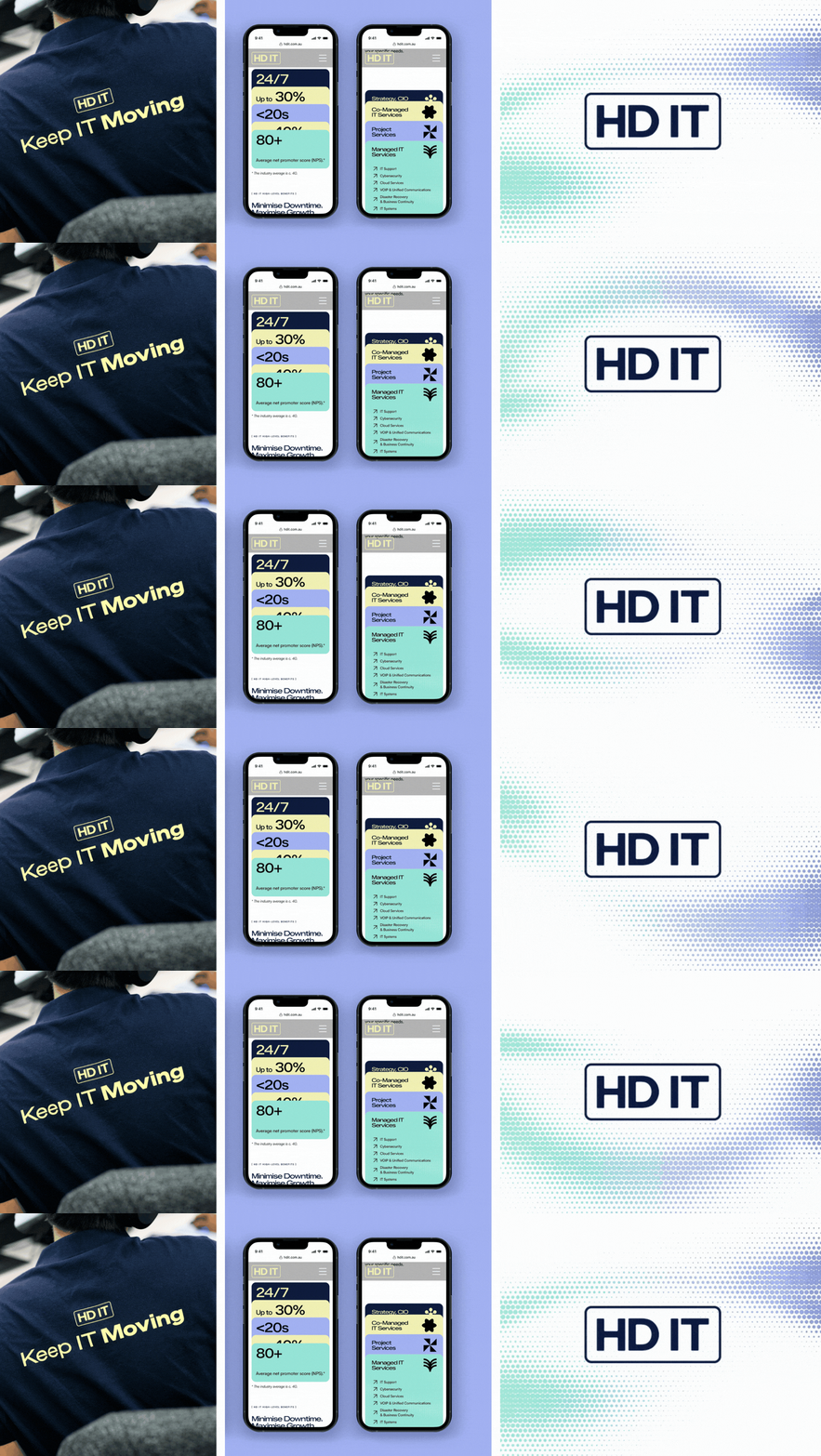
To appeal to AI’s highly rational search criteria, we introduced FAQs, reviews, credentials, results statistics and other tangible evidence that proves that HD IT genuinely delivers on their brand promises.
We also created a dedicated insights section (called “Momentum”), which houses blog content that tapped into the topics audiences are searching for online and on social (e.g. cybersecurity, scam emails, AI implementation).
And to top it all off, we embedded a clear brand narrative into the entire information architecture, starting with the high-level story on the home and about pages, then unpacking that story across four clear service categories: Strategy & AI, Managed IT, Co-Managed IT and Project Services.
Looking to Drive Growth Through AI?
If you’re looking to use artificial intelligence the smart way, reach out to our Director Nick for an initial consultation.
We'll cast our expert eye over your marketing architecture, identifying what’s working, what could be refined and how you can get the most from this incredible (but intricate) new technology.
Book a Consultation with TOAST →





TOAST acknowledges the Gadigal people of the Eora Nation, the traditional custodians of the land on which our agency stands. We celebrate the stories, culture and traditions of Aboriginal and Torres Strait Islander Elders of all communities who also work and live on this land.
