We would love to hear about your Project
Get In Touch
Follow Us





.svg)
Brand & Engagement
|
June 10, 2026
|
5 MIN READ
How Can You Unify Your Business Lines into a Simple but Powerful Brand System?
It’s an issue caused by success itself: as your business grows, it expands into more product lines, services and verticals, each with a different name, identity and look and feel.

With this expansion comes confusion: each brand sends out a different message to your customers, making it harder for them to remember all your different services. Not only does this dilute your market presence, it obstructs cross-selling: with no linked-up identity, customers won’t understand the full breadth of what you do and will only come to you for the service they know of. (Think of it like throwing tennis balls at your customer at once: they’ll most likely be able to catch a couple at best.)
So, how do you build a group brand system that’s clear, simple and drives recall, without losing what makes each of your services valuable? When brands get this balance right, their business profile has greater potential to be massively amplified, as our recent work for the Steadfast-backed underwriting group Miramar demonstrates nicely.
Step 1: Identify
Investigate What Makes Each Business Line Unique
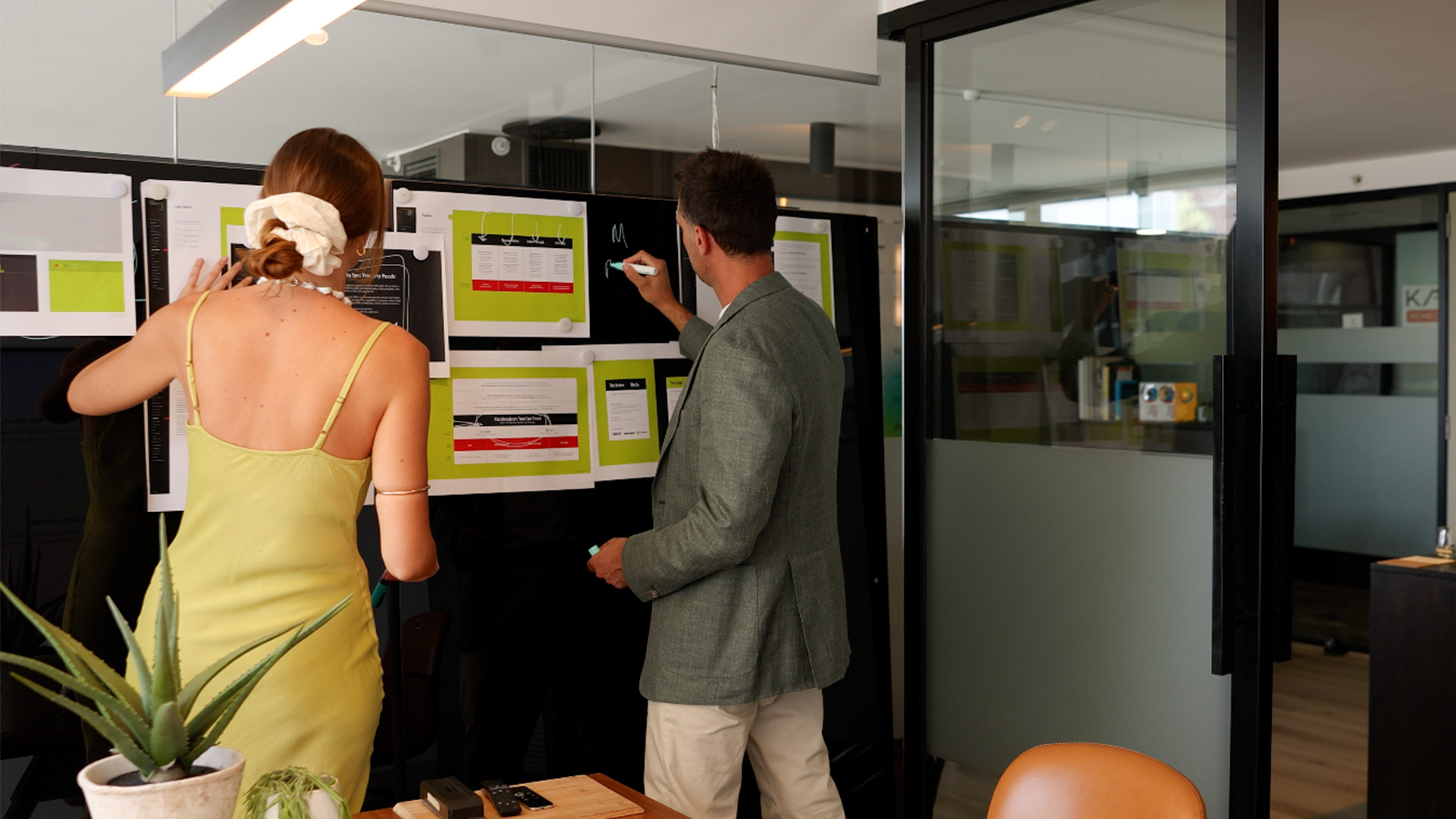
To understand the collective value of your business lines, audit each unit in microscopic detail. That way, the group identity can articulate the full value of what you offer, and nothing gets lost in translation.
Talk to the leaders of each service, interview their customers and dive deep into their arcane details of their products. As you get into the weeds, it’s worth bearing in mind the following questions:
- What does each business unit do? (Company)
- What consumer problem do their products credibly solve? (Customer)
- What makes them stand out amongst their competitors? (Competition)
- What’s going on in culture that the brand could credibly support or challenge? (Culture)
Brand expert Julian Cole calls these questions the 4Cs of brand strategy. They’re designed to give you a 360° view of each brand, helping you paint a clearer picture of what makes them distinct.
Step 2: Unify
Find the Common Theme Across All Your Brands
At some point during all this detective work, you’ll start to notice some similarities. It might be something as subtle as a shared mentality (e.g. going above and beyond or rigorous attention-to-detail). Or it might be something as significant as the feeling they each create in the customers’ mind (e.g. calm, reassurance, clarity).
Whatever that common factor may be, if it’s consistent, distinctive and likely to benefit all your different customer segments, it’s worth doubling down on.
You can then convert that shared proposition into a coherent narrative for your whole master brand. When putting together that narrative, start with the big picture problem your group’s customers are facing, then explain how you solve that problem through your distinct combination of services.
The result: a story the entire business can rally behind, ensuring every message you put out links back to a clear and consistent idea that’s easy to recall (and more importantly, strengthens your market presence).
“By linking your parent brand with sub-brands, it aligns identity, messaging, and positioning—creating a cohesive presence across your portfolio.”
Ally Heinrich, Harvard Business School
Step 3: Codify
Choose the Right Group Brand System
The last step is to turn this story into a structured system. It’s about pinpointing what group brand architecture works best for your business and services, so that all future communications follow a coherent and consistent logic. Here are some of the key options at play:
1. Branded House
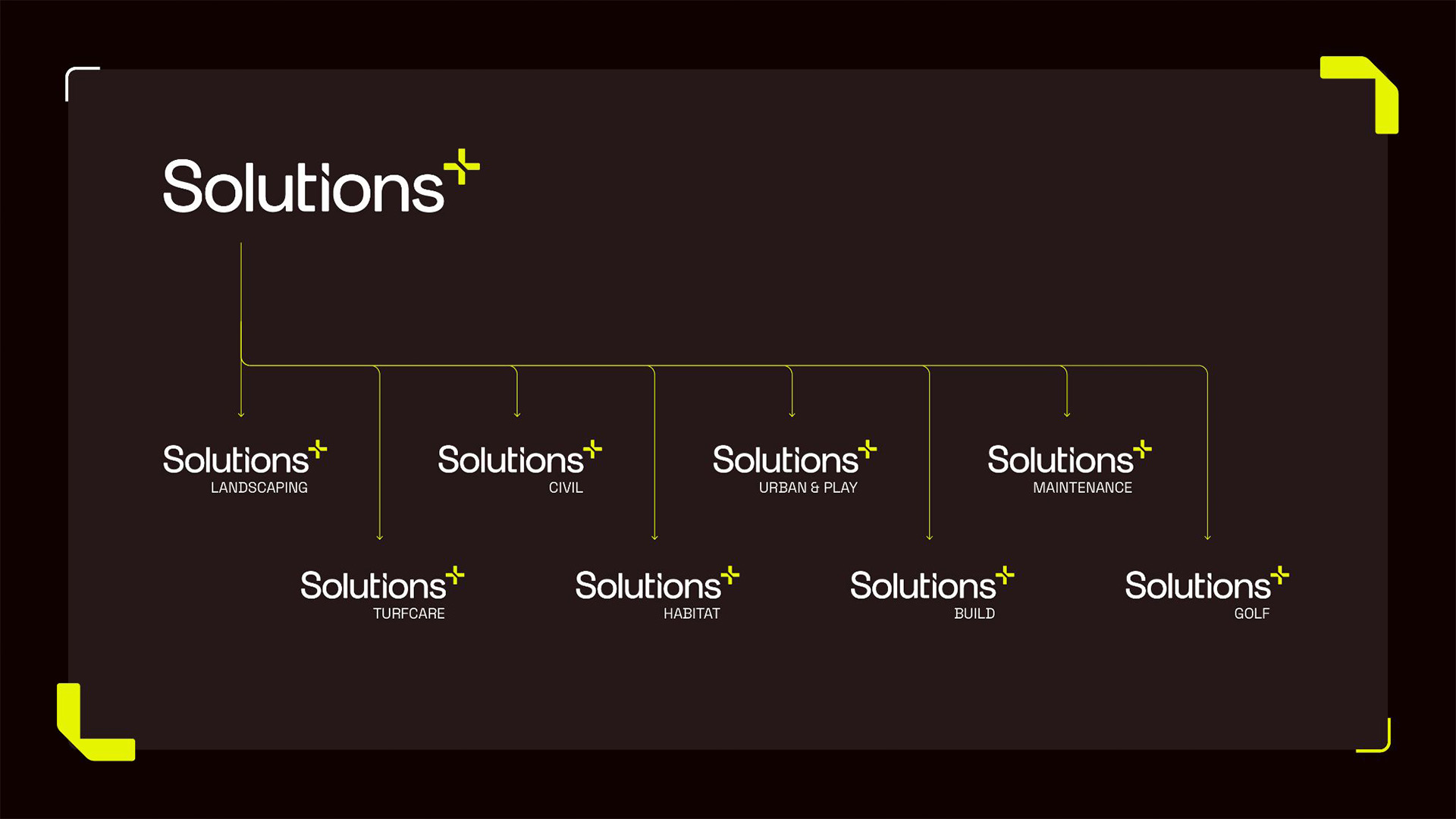
Let’s start with the simplest option. A branded house is when all your business lines operate as offerings under one master brand, with no individual identity of their own. It works best when all your products or services have exactly the same target audiences. Each service links back to the same brand and strengthens your group’s reputation in customers’ minds, driving cross-selling and sales further down the line.
2. Linked Sub-Brands
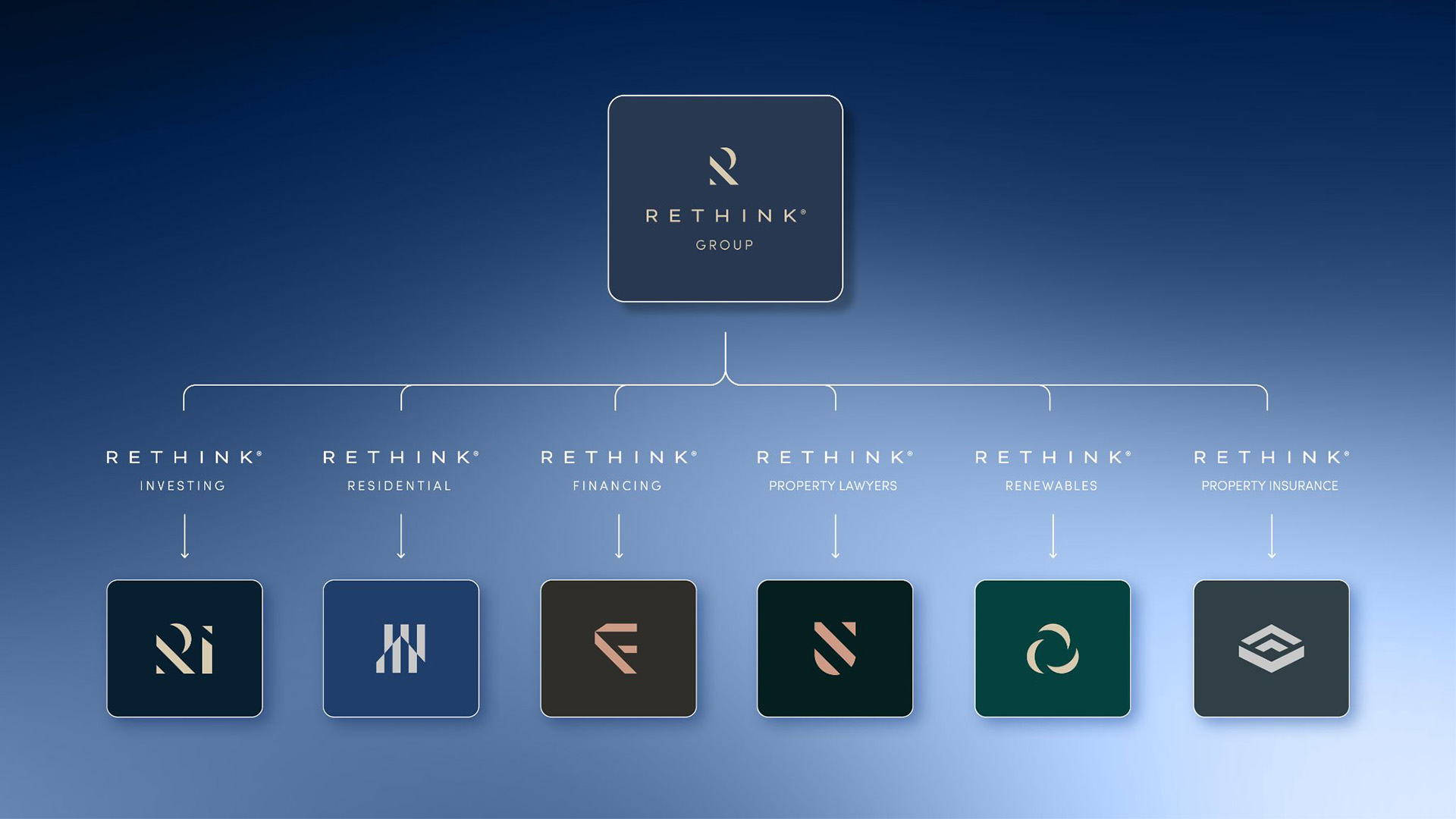
Linked sub-brands are distinct offerings connected by a shared master brand and visual or strategic system. This works best for businesses with multiple products or services that solve different problems, but still belong to the same ecosystem or worldview. The master brand creates consistency. The sub-brands express clarity and specificity.
3. Endorsed Brand
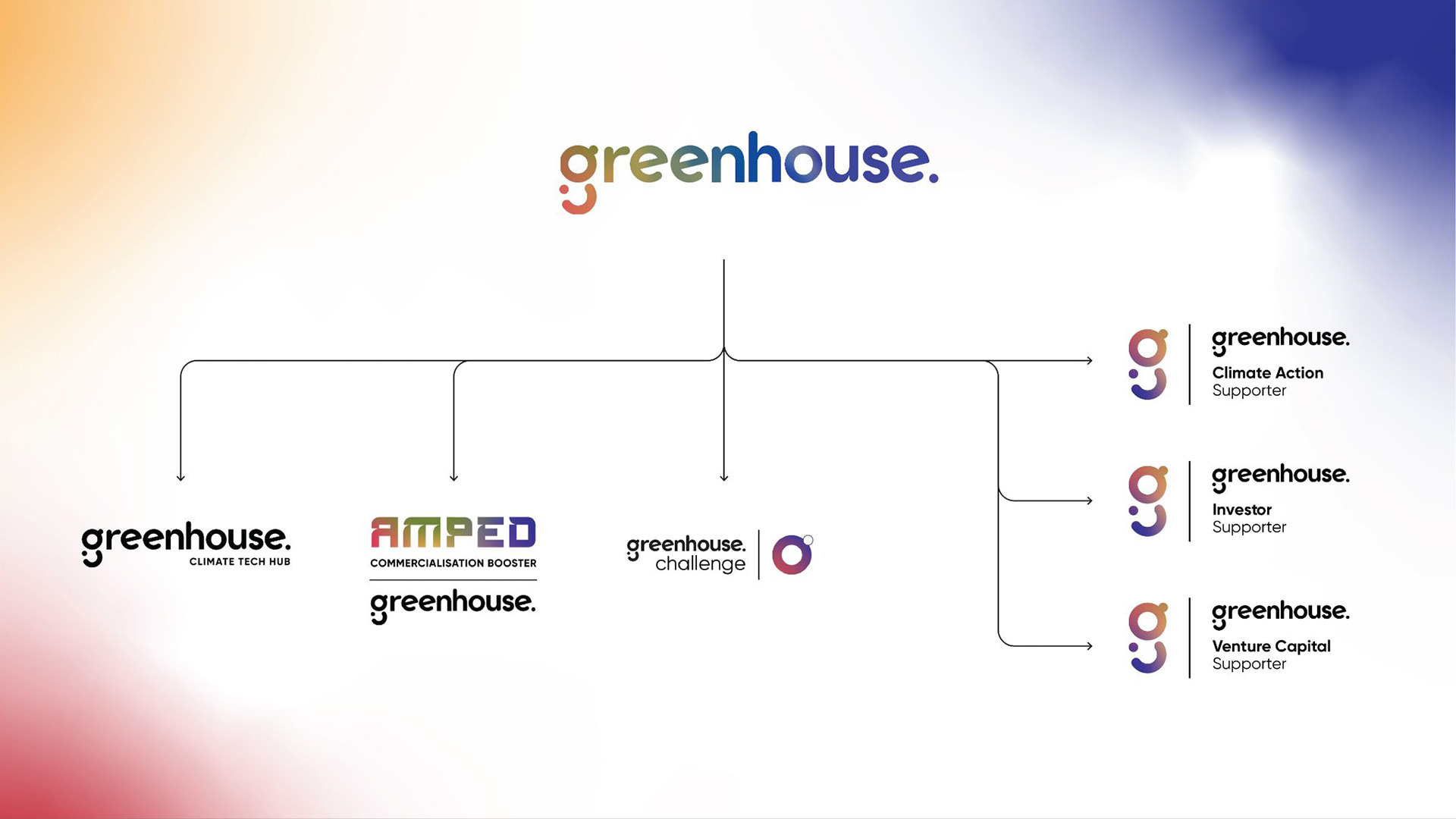
An endorsed brand architecture is when individual brands maintain their own identity, but are backed by a recognisable parent brand. This works well for businesses with specialist offerings that still benefit from shared credibility. It’s designed to provide the reassurance and recognition of a big, largescale company, without sacrificing relevance or flexibility.
CASE STUDY
Miramar Group
One Group. Three Divisions. Endless Opportunities.
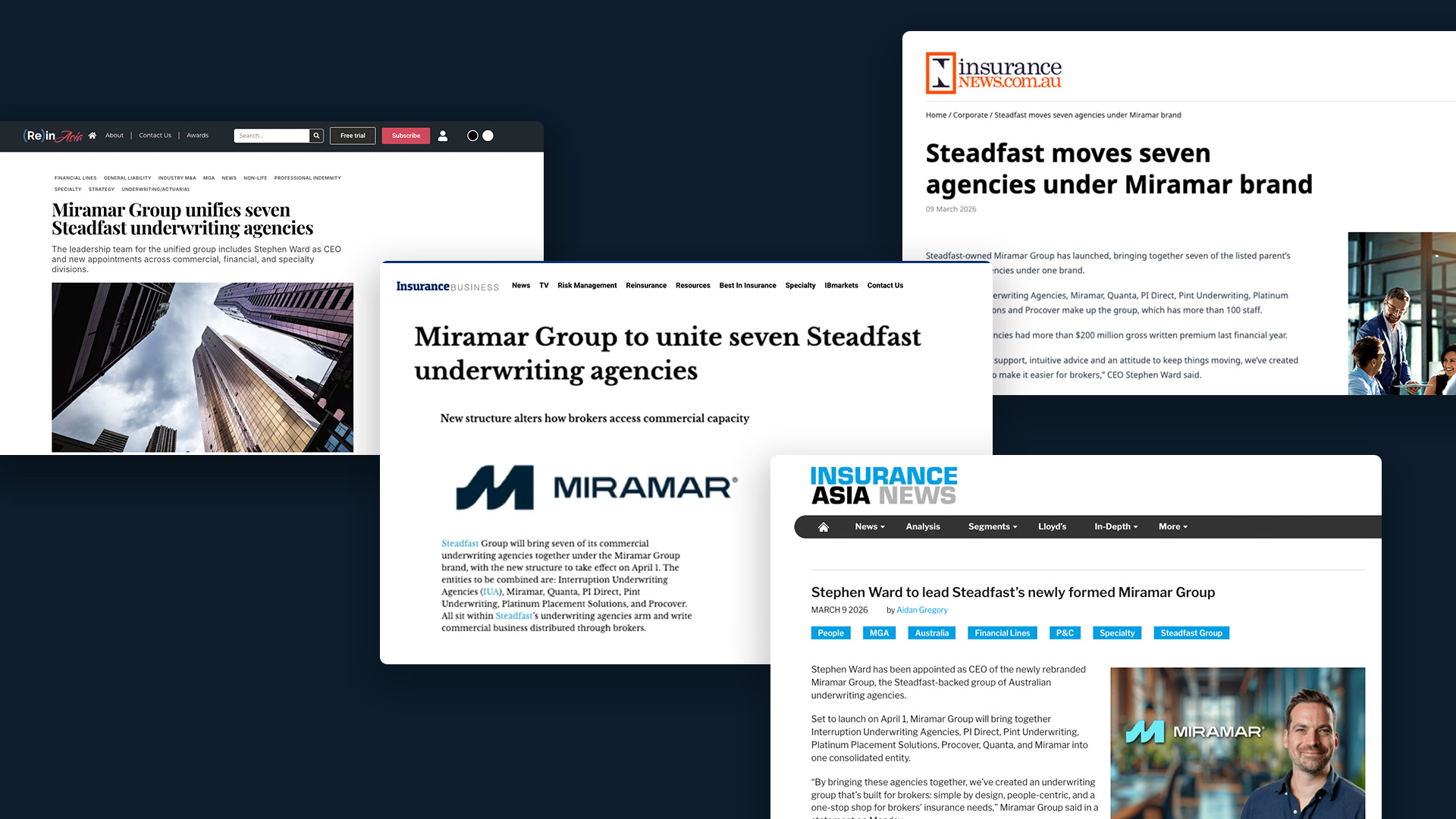
Miramar, owned by Steadfast Group, came to us not as one business, but seven. They wanted to consolidate seven commercial underwriting agencies into one future-facing group that would strengthen market presence for years to come. With agencies that offer solutions for common-to-niche risks, the challenge was to find a distinctive but commercially compelling thread that ran through everything they did.
By working closely with the leaders of each business line, conducting desktop research into their audiences and auditing the competitors, we discovered the joint DNA of this new group: an underwriting group that backs brokers with a broad range of coverages, specialist knowledge, and real human support.
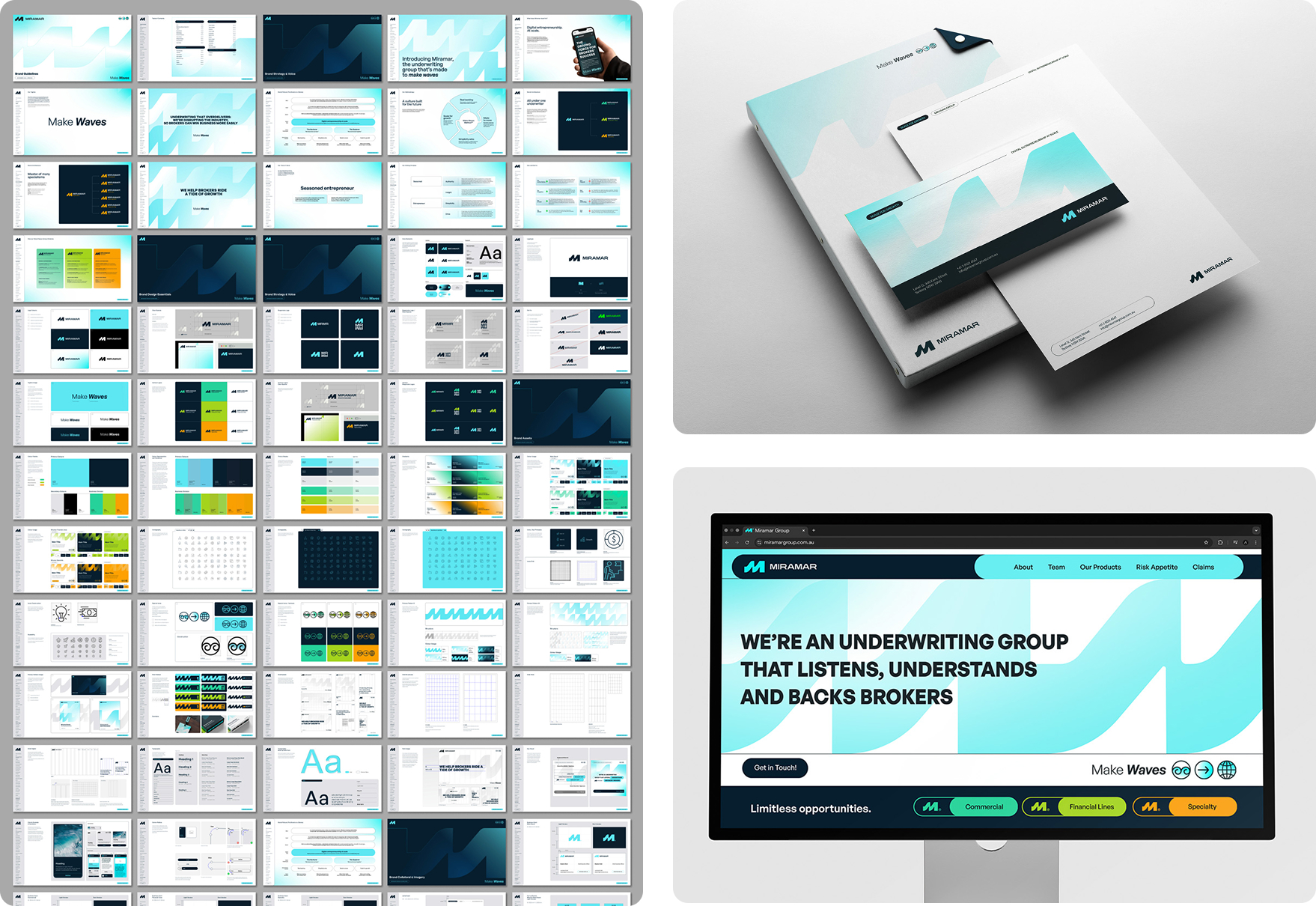
This DNA set the foundation for their new brand proposition, “Make Waves”, capturing how they’re disrupting the industry to power brokers’ success. To express the idea, we crafted an elegant wave-like logo that nodded to the “M” of the word “Miramar”, a blue gradient that flowed effortlessly through all assets and digital iconography that was unapologetically modern, authoritative and bold.
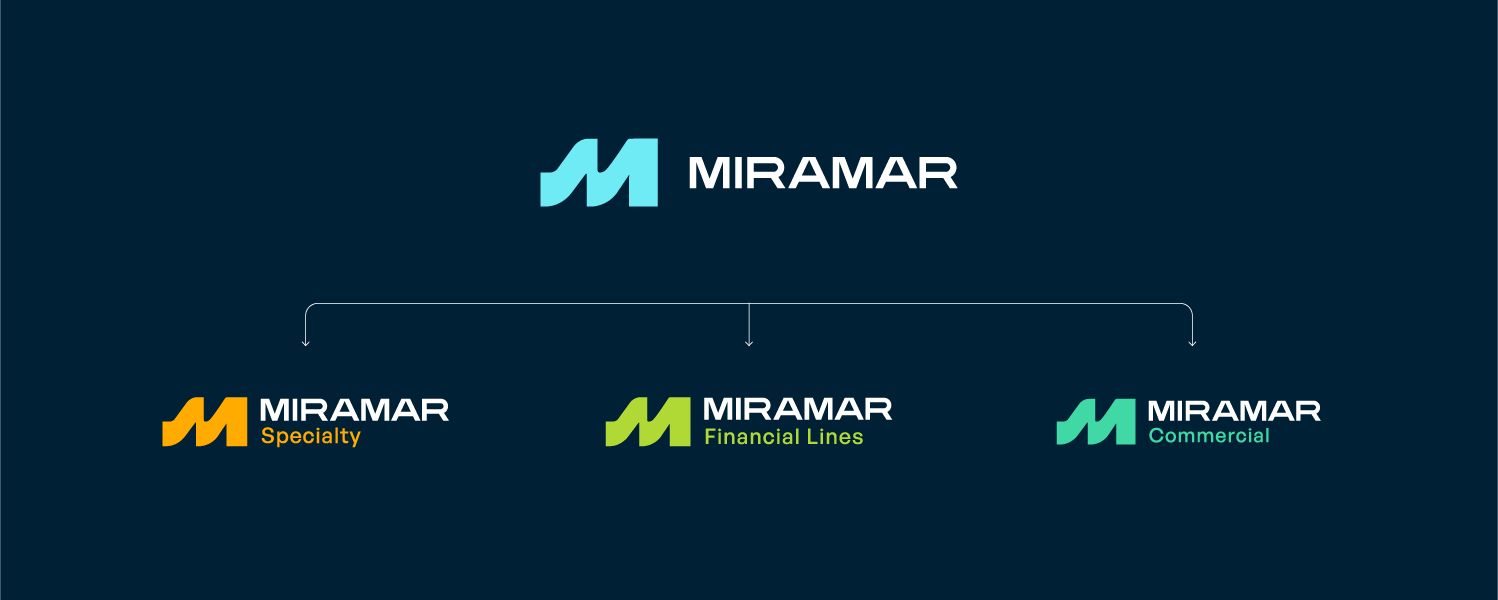
We also categorised their previous seven brands into three new divisions under a Branded House model: Commercial, Financial Lines and Specialty. This signalled their dedicated expertise in an industry where technical knowledge is essential, without compromising or diluting the overall group footprint.
The result: a consistent but dynamic group that’s made to make waves.
“Miramar Group wasn’t just launching a new logo. They were bringing together seven businesses, each with different audiences, expertise and legacy equity. The opportunity was to create a unified brand system that could simplify the market offering, while amplifying the collective strength of the group.”
Emile Rastoll, Brand Transformation Director at TOAST
Looking to Collaborate?
It can be tough to know which brand architecture is right for your company, your customers and the highly specific business context you’re working in. We’ve worked across many sectors, know the patterns, and can help you choose wisely.




TOAST acknowledges the Gadigal people of the Eora Nation, the traditional custodians of the land on which our agency stands. We celebrate the stories, culture and traditions of Aboriginal and Torres Strait Islander Elders of all communities who also work and live on this land.
.svg)